

On 5 November 2026, the journal Frontiers in Ecology and the Environment published a paper by Jonas Simons, Kris Vandekerkhove and Bart Muys whose title is a question: primary, ancient, or old-growth? The three words are used almost interchangeably in policy documents, in investment memoranda and in the press. The authors argue that they describe three different things, that a forest can possess one without the others, and that each is gained and lost in a different way.
Their framework treats what they call ecological continuity as having three dimensions, two of them in time and one in space. Ancientness is the continued existence of forest on the same ground, and it relates to soil and microclimate that have not been disturbed. Old-growthness is the continuity of the structures that appear late in a forest's life: large and old trees, and dead wood. Contiguity is the unbroken extent of the forest across a landscape. The three may coincide, the authors write, but not necessarily, and each carries distinct value for biodiversity and calls for different conservation.
One legal system already works this way. In England, the standing advice issued to planning authorities by Natural England and the Forestry Commission defines ancient woodland as any area that has been wooded continuously since at least the year 1600. It specifies that not all the trees have to be old. It describes such woodland as an irreplaceable habitat that takes hundreds of years to establish. And it instructs the authority deciding on a development not to consider proposed compensation measures when weighing the merits of the proposal, on the ground that what would be lost cannot be replaced. The protected thing is not the timber, which may be young. It is a date.
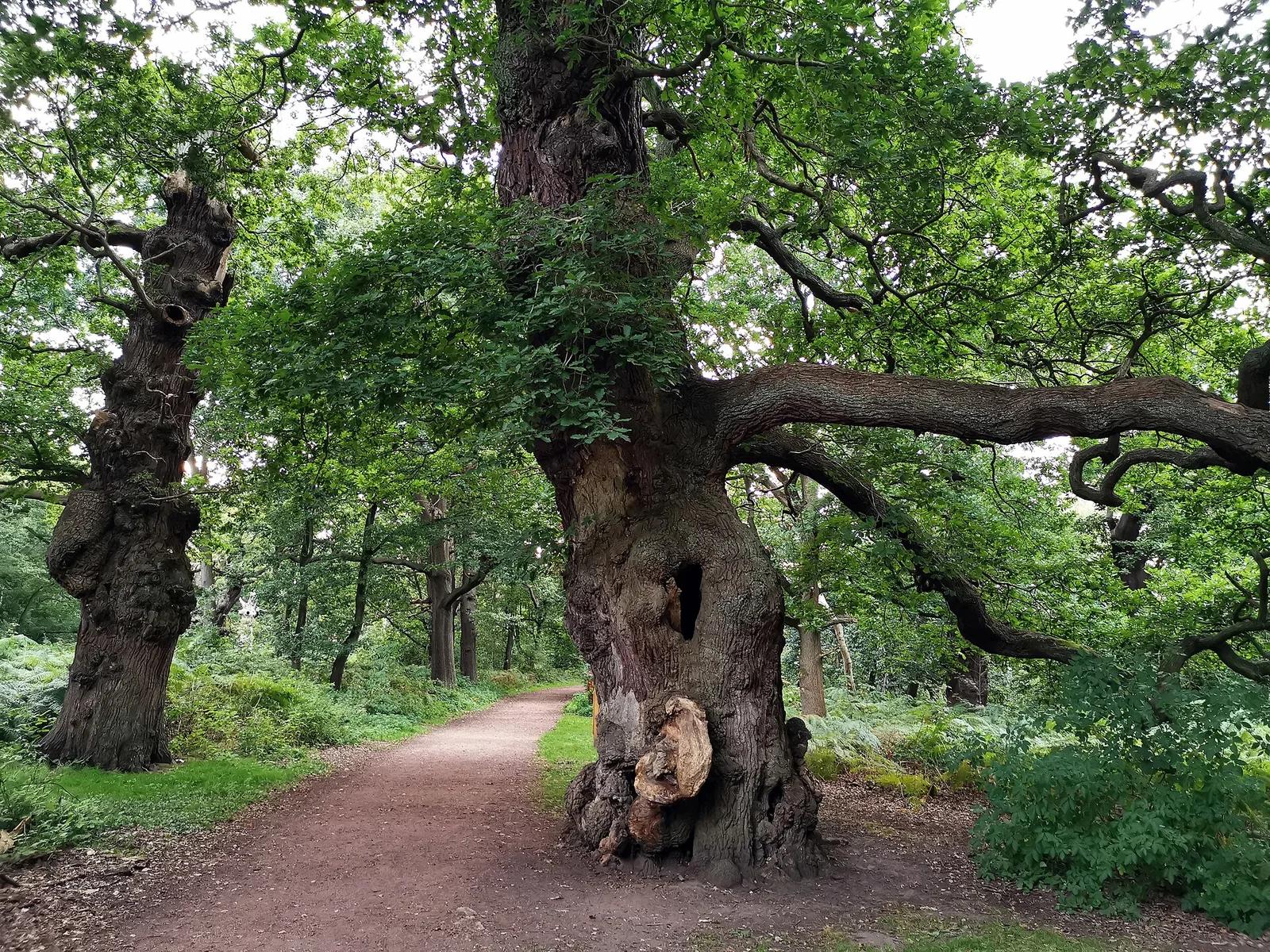
How much is left to protect on those terms has been counted for Europe as a whole. In 2018, Sabatini and colleagues assembled, in the journal Diversity and Distributions, the most comprehensive map then available of the continent's known primary forests. The total was one point four million hectares across thirty-two countries: zero point seven percent of Europe's forest area. Eighty-nine percent of it was protected, but only forty-six percent strictly. The European Union's Biodiversity Strategy has since committed to strictly protect all that remains, and the European Commission has issued guidelines to help governments define, map and monitor it. A continent is searching for the fraction of its forest that was never cleared.
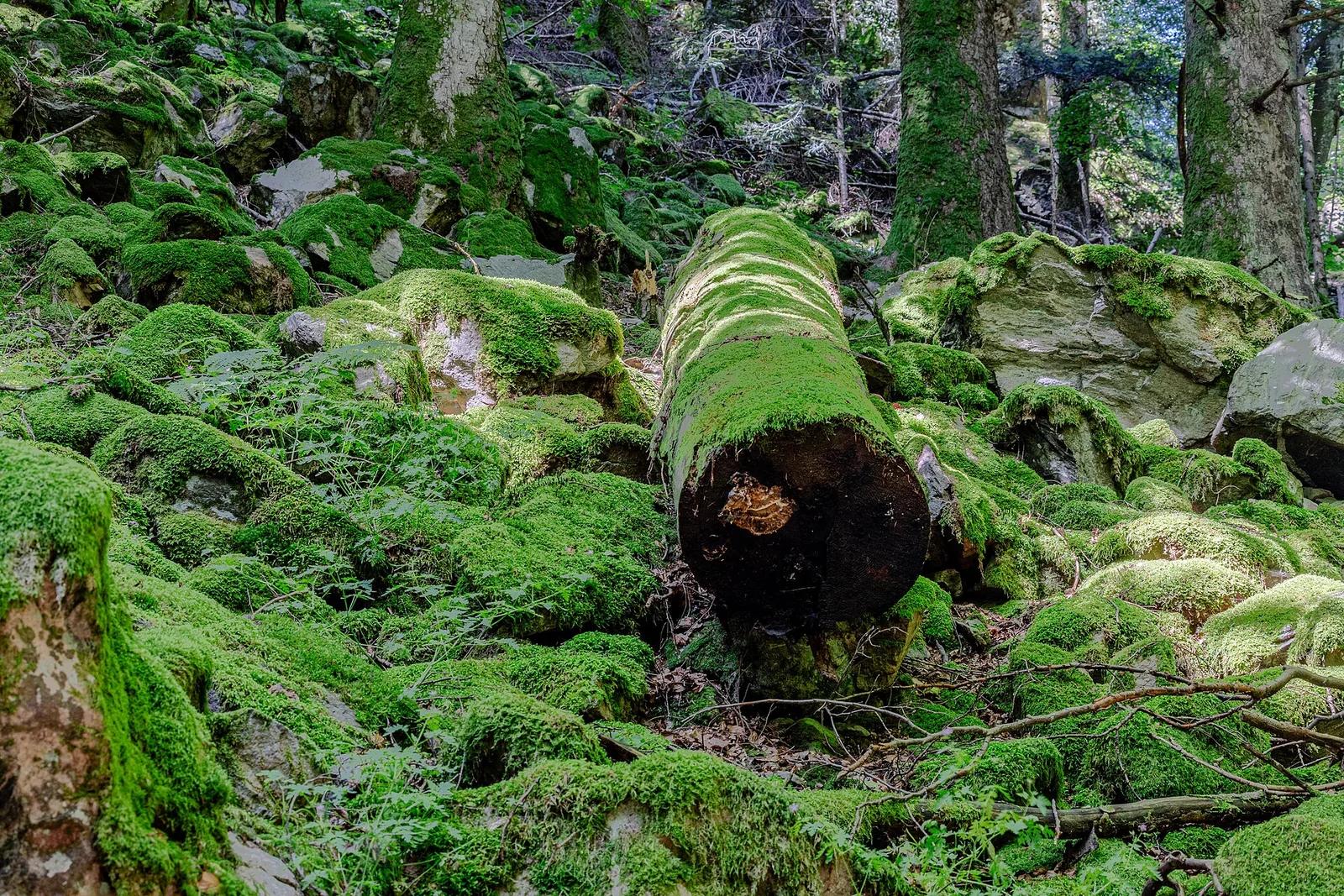
What that fraction holds was measured this year. In March 2026, Pascual and colleagues reported in Science the results of extensive mapping and field inventories in Sweden. Primary forests stored about seventy-two percent more carbon than managed secondary forests, counting vegetation, dead wood, soils and harvested wood products together, with a range of seventy to seventy-four percent across methods. Soils were both the largest store and the largest difference between the two kinds of forest. The gap, the authors noted, was between two point seven and eight times larger than earlier estimates. The greater part of what distinguishes the forest that was never cut lies below the surface, where no survey of trees would find it.
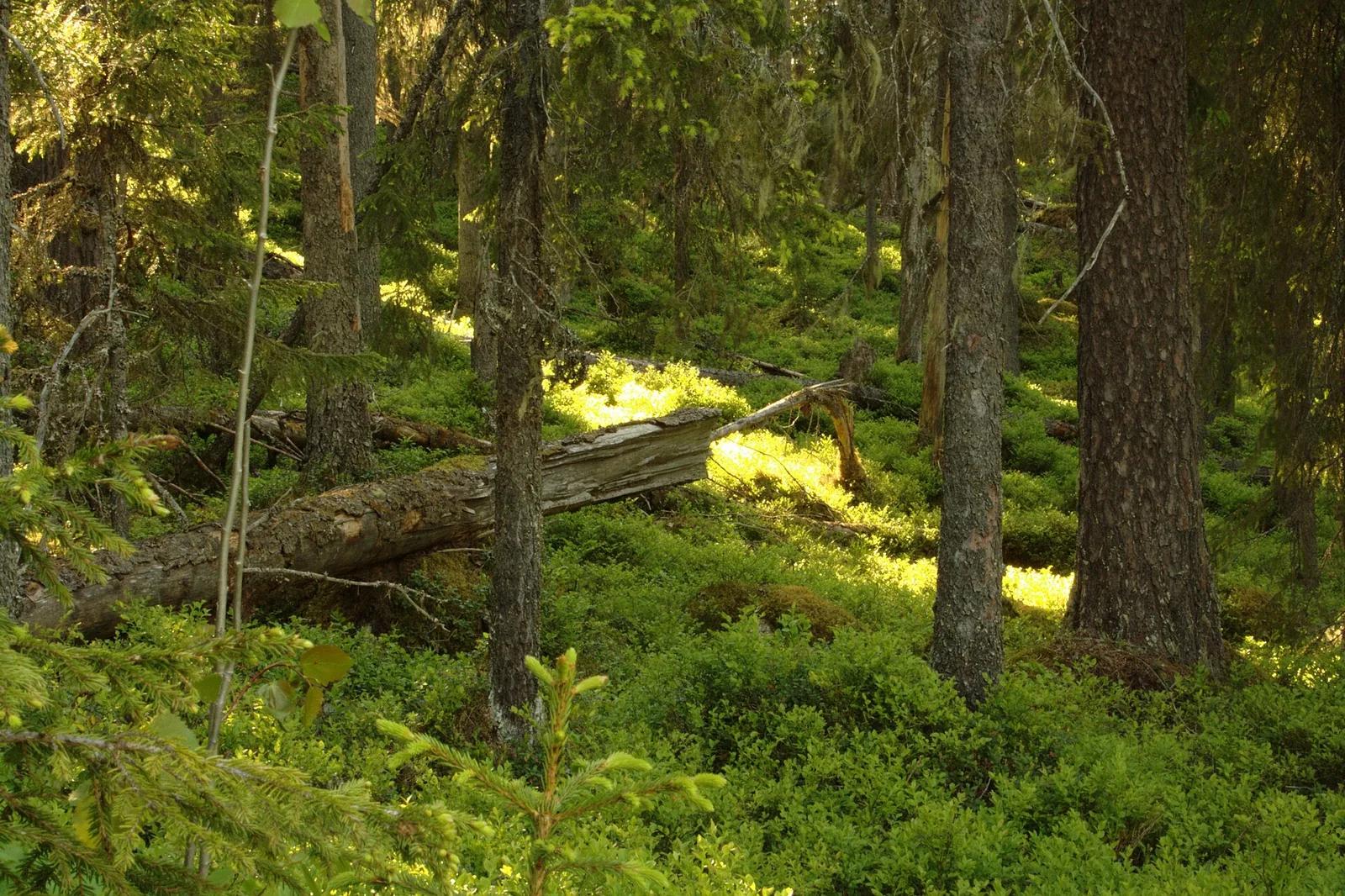
It is worth stating precisely what each of these sources can support. The paper in Frontiers is a conceptual framework, not a measurement, and it was written from the experience of European forestry. Its authors describe how ancientness and old-growthness develop as well as how they are lost, which implies that neither is beyond recovery given enough time. The English threshold of 1600 is an administrative convention, not an ecological boundary. The Swedish study is regional and boreal. The European count covers only primary forest that has been identified, and its authors report that national data were often incomplete or inconsistent. The connection drawn here between the soil finding in Sweden and the idea of ancientness is this article's own.
And there the reading reorders itself. The three dimensions are not equally available. Contiguity can be assembled: parcels can be joined and corridors restored. Old-growth structure can be waited for, over a span of generations. Ancientness is of another kind, because it is not a condition of the forest at all. It is a record: the fact that, on this ground, the forest was never interrupted. A record cannot be accelerated or purchased. It can only be extended by one more year, or ended. The closest equivalent is the provenance of a work of art, which belongs not to the object's present state but to its documented history, cannot be supplied afterwards, and is broken by a single gap. Most instruments that value forests today, by canopy cover, by tonne or by hectare, describe the canvas. English planning guidance recognises the provenance, in the only way open to it: by declining to accept anything in exchange.
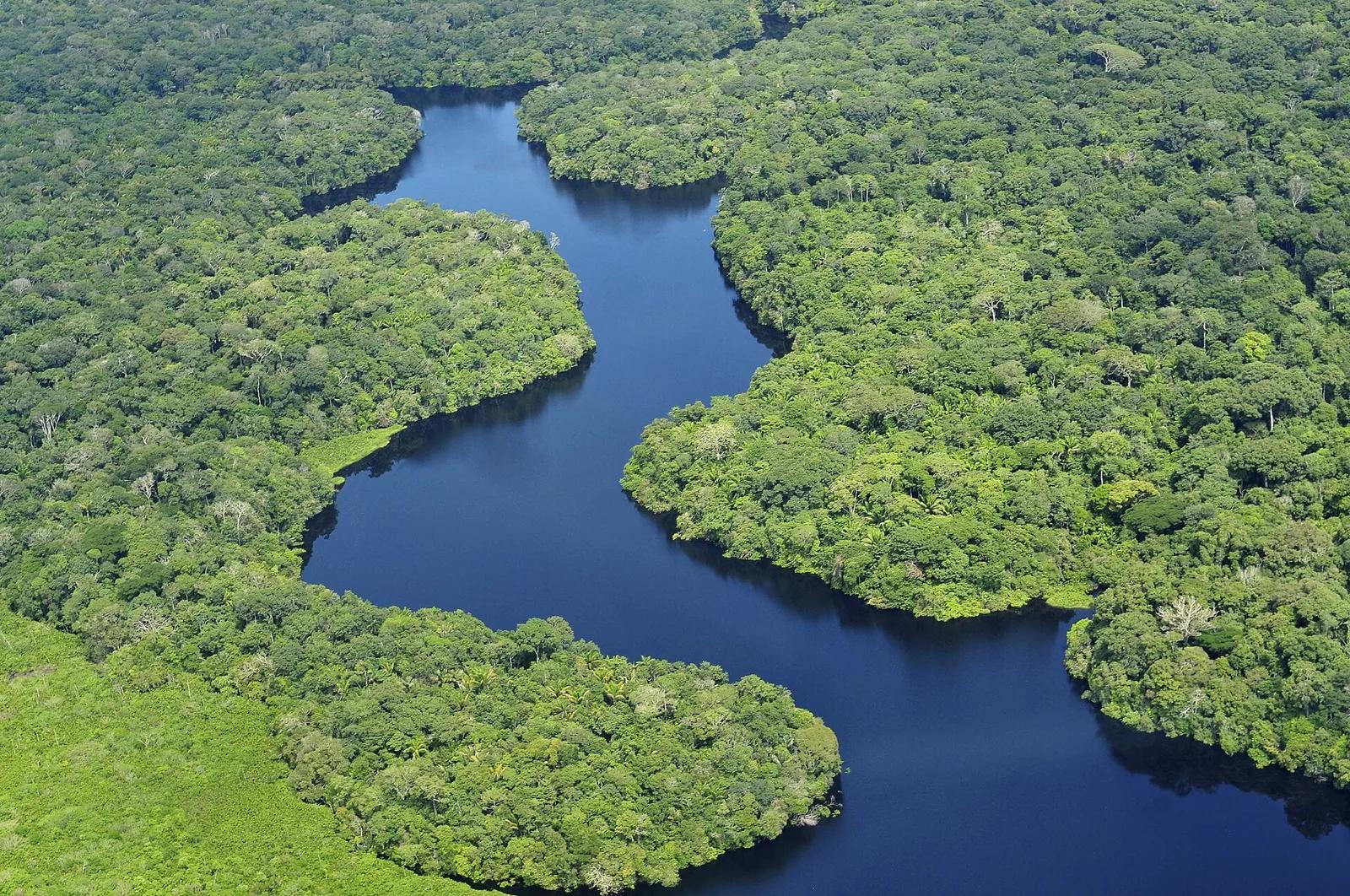
That is the premise behind Hortus Deliciarum in the Ecuadorian Amazon: securing primary forest under title and long-term custody is not philanthropy. It is keeping an unbroken record unbroken, which is the one thing about a forest that no later investment can supply. If Europe is mapping the last seven tenths of one percent of what it once had, what is the value of a forest whose record has never been interrupted? The documentation is at www.hortusdeliciarum.org
SOURCES
Peer-reviewed research — Simons, J., Vandekerkhove, K. and Muys, B., "Primary, ancient, or old-growth? Navigating the dimensions of ecological continuity in forests", Frontiers in Ecology and the Environment, e70083 (5 November 2026), doi 10.1002/fee.70083; Pascual, D. et al., "Higher carbon storage in primary than secondary boreal forests in Sweden", Science 391, 1256–1261 (19 March 2026), doi 10.1126/science.adz8554; Sabatini, F. M. et al., "Where are Europe's last primary forests?", Diversity and Distributions 24, 1426–1439 (2018), doi 10.1111/ddi.12778. Regulatory framework — Natural England and Forestry Commission, "Ancient woodland, ancient trees and veteran trees: advice for making planning decisions", standing advice published on GOV.UK; European Commission, "Guidelines for Defining, Mapping, Monitoring and Strictly Protecting EU Primary and Old-Growth Forests", SWD(2023) 62; EU Biodiversity Strategy for 2030. Methodological note — The three studies were consulted through their abstracts, not their full texts. The Commission guidelines were consulted through their official publication page. The comparison with provenance in art is an analogy offered by this article, not by any of the authors cited. Photo credits — Cover, primeval beech forest of Mala Uholka, Ukrainian Carpathians: Urs-Beat Brändli, CC BY-SA 4.0, cropped. Ancient oaks in Sherwood Forest, England: Phil Champion, CC BY-SA 2.0. Dead wood under moss, Black Forest, Germany: Dietmar Rabich, CC BY-SA 4.0. Old-growth forest of Tuggensele, Sweden: MikaelLindmark, CC BY-SA 3.0. Amazon forest from the air: Neil Palmer/CIAT, CC BY-SA 2.0. All via Wikimedia Commons.
© Hortus Deliciarum Strategic Conservation | Amazon
This document is provided for informational purposes. Data and findings are sourced from peer-reviewed research, government records, and verified scientific publications.