

In November 2024, in the Caxiuanã National Forest in the Brazilian state of Pará, researchers took down six thousand transparent plastic panels that had hung beneath the canopy for twenty-three years. The panels had a single purpose: to divert about half of the rain falling on one hectare of Amazon rainforest, while an identical hectare beside it was left untouched. The experiment, known as Esecaflor, is the longest of its kind ever maintained in a tropical forest, and its results were published in Nature Ecology & Evolution in May 2025. The headline was that the forest did not collapse. The detail was what it gave up in order not to.
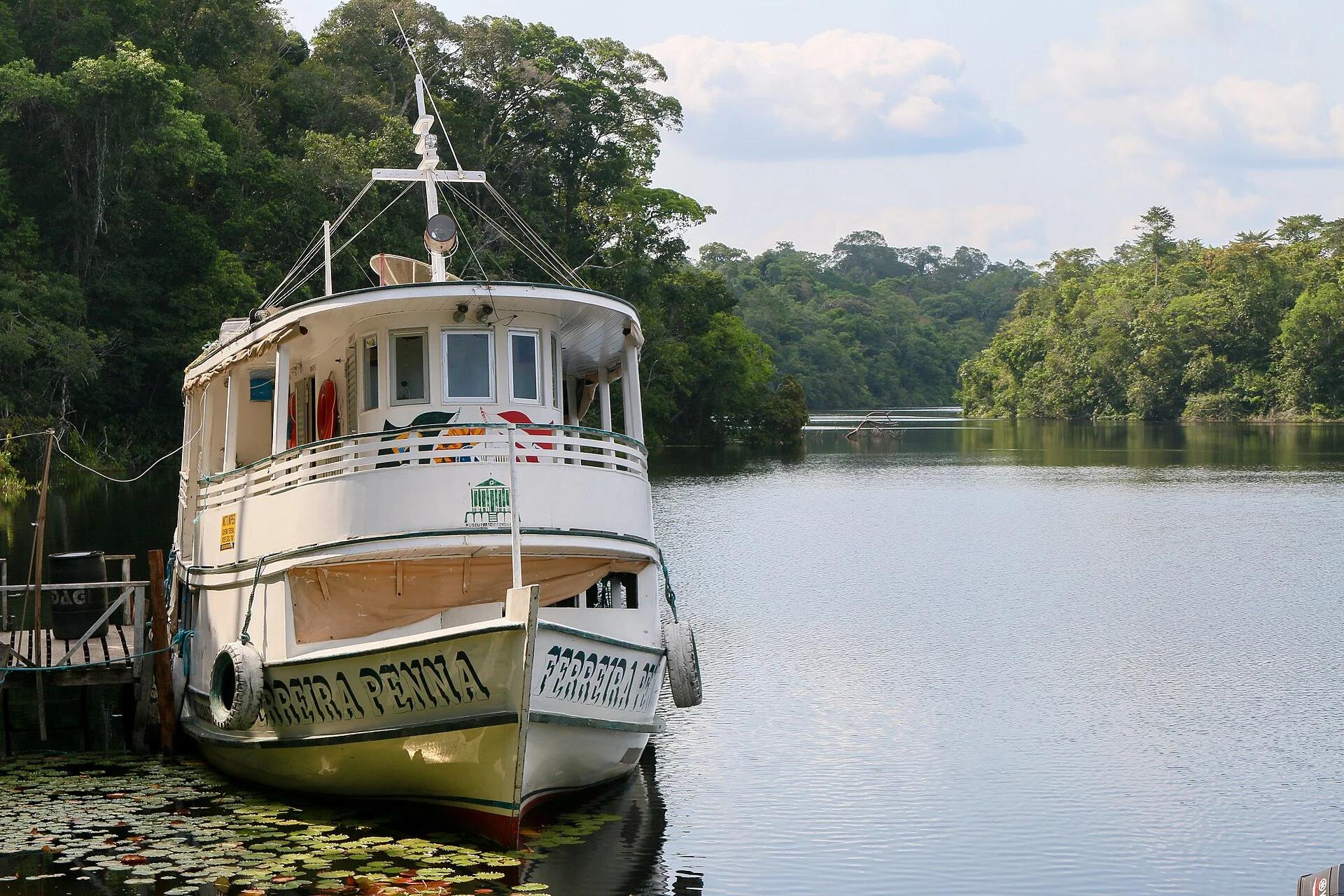
The measurements are precise. The plot began with two hundred and forty-eight tonnes of carbon per hectare in its above-ground wood. Over the first fifteen years of drought it lost eighty-five of them, thirty-four percent, and then, for the following seven years, it stopped losing. The surviving trees showed no sign of water stress: their leaf water potential, sap flow and tissue water content converged on the values measured in the untouched hectare next door. The authors call the result eco-hydrological stability. By formal criteria the plot is still forested, with a tree density above twenty percent, a height above five metres and a leaf area index above three. Its stock now stands near one hundred and sixty-four tonnes of carbon per hectare: below the Amazon rainforest average of two hundred and sixty-six, above the one hundred and twenty-five of the region's dry forests.
The mechanism of that stability is the uncomfortable part. The forest balanced its water budget by shedding its largest consumers. The paper attributes the decline to a disproportionately high loss of large trees; the project's coordinator, Antonio Lôla da Costa of the Federal University of Pará, places the onset of mortality after the fifth year, concentrated in trees with trunks wider than fifty centimetres. An earlier study from the same plot, published in Nature in 2015, had already found that the mortality signal was dominated by the death of large trees, which were at much greater risk of hydraulic deterioration than small ones. Once they were gone, there was enough water for the rest. What remains is a more open canopy, with fewer top-canopy and emergent trees.
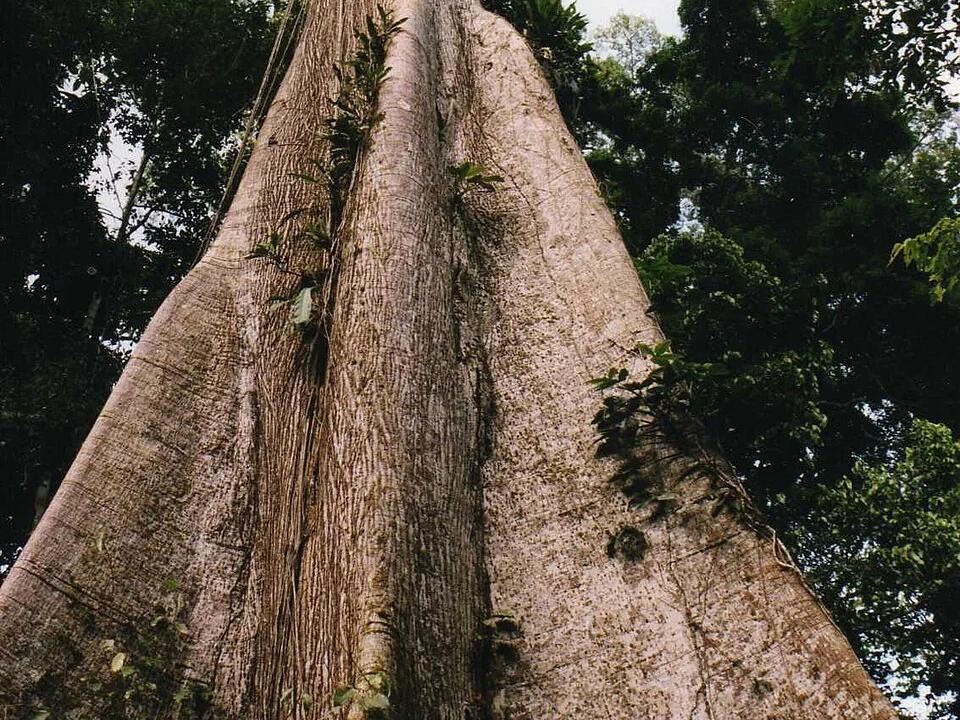
Nothing in that pattern is peculiar to one hectare in Pará. A synthesis of forty drought events in forests worldwide, published in Nature Plants in 2015, found that drought consistently did more damage to the growth and survival of larger trees, and that mortality rose with tree size in sixty-five percent of the droughts examined. And large trees are where a forest keeps its mass. Across a global network of forty-eight large forest plots, covering more than five point six million stems, the largest one percent of trees held on average fifty percent of the above-ground live biomass, and trees wider than sixty centimetres held forty-one percent. They are also where a forest keeps its time. When twenty large emergent trees from a central Amazon rainforest were radiocarbon-dated in 1998, some proved to be more than one thousand four hundred years old.
This is where the experiment meets the statistics. The Forest Declaration Assessment, published in October 2026, reported that global deforestation fell fifteen percent in 2025, to just over seven million hectares, its largest annual decline since the baseline period of 2018 to 2020. Deforestation is measured in area, and a forest that has lost its largest trees has lost no area at all. The same report carries a second measure, of forest that remains standing but has dropped into a lower category of ecological integrity. In 2024, the latest year available, it amounted to sixty-five point four million hectares, an order of magnitude more than the eight point two million hectares cleared that year. The Caxiuanã plot would not appear in the first ledger. It is, by definition, still a forest.
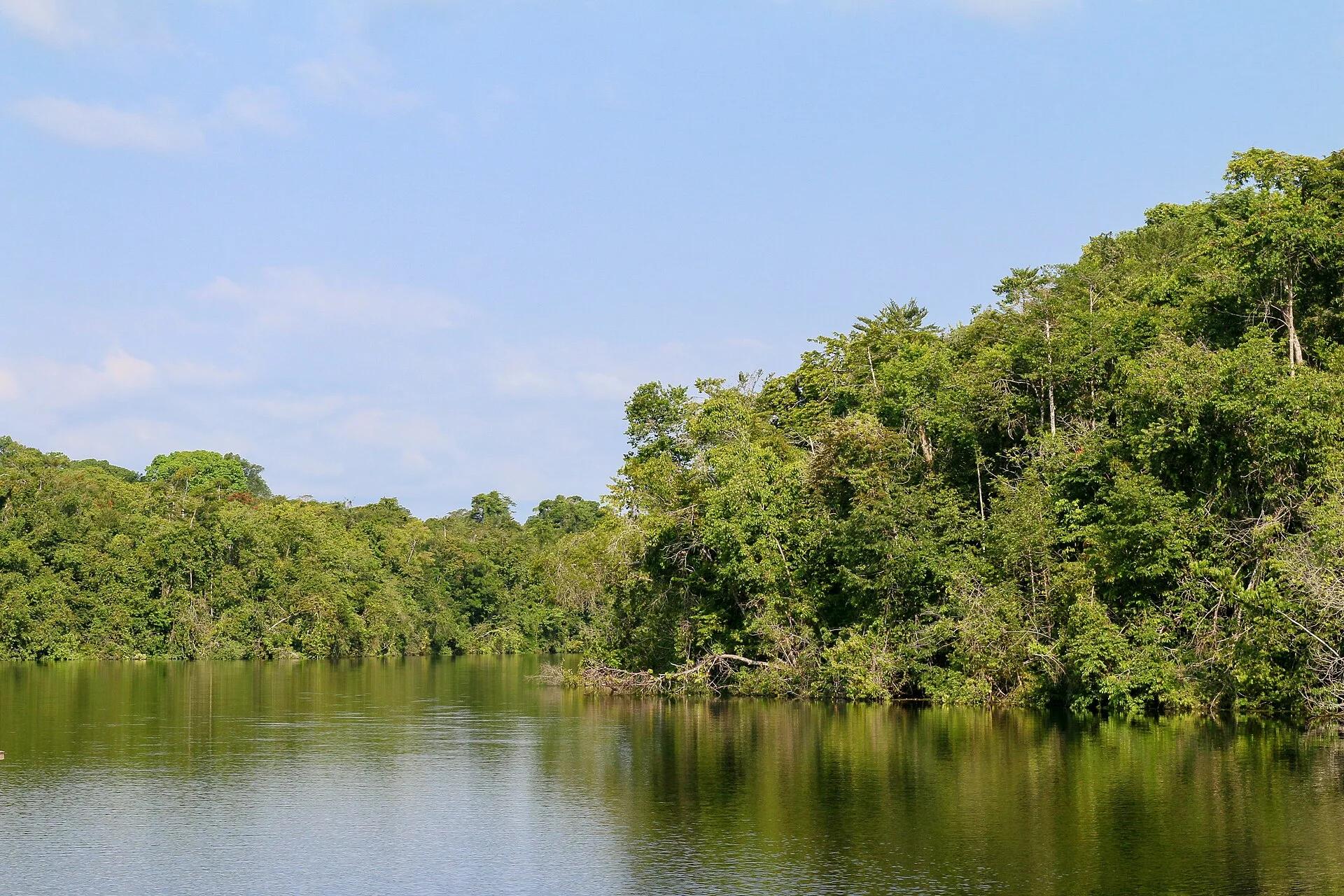
It is worth stating precisely what this evidence supports and what it does not. The experiment covers one hectare at one site in the eastern Amazon, and it dried the soil, not the air; the authors themselves note that their figures may be conservative relative to a natural drought, which adds heat and atmospheric dryness over far larger areas. Its central finding is one of resilience: the researchers reject the idea that a drying rainforest turns into savanna, and describe instead a degraded forest for which there is no natural reference. The coordinator's own account, quoted in the press, puts the loss nearer fifty percent of the biomass; the figure used here is the peer-reviewed one, thirty-four percent of above-ground wood. The forty-eight plots span several forest biomes, with wide variation from one hectare to the next, and the radiocarbon ages belong to exceptional individuals, not to the average tree. The integrity figure comes from a coalition of civil society and research organisations that tracks forest pledges, not from an official statistical body. And whether the large trees return is, for now, an open question: the panels came down precisely to find out. Lucy Rowland of the University of Exeter, one of the project's lead researchers, does not expect it to be quick. Some species, she says, may take decades or even centuries.
And there the reading reorders itself. A forest's accounts are kept in hectares; its capital is held in a small number of very large, very old trees. Those trees are the first thing a drought takes and the last thing time returns, and their departure is entered in no register: the hectare is still there, still green, still counted. The stabilised plot at Caxiuanã is the cleanest demonstration available that a forest can remain a forest while ceasing to be the same asset. What separates the two hectares of the experiment is not area, and it is not legal category. It is the structure that centuries built on one side and its absence on the other, a difference no instrument of land accounting was designed to see.
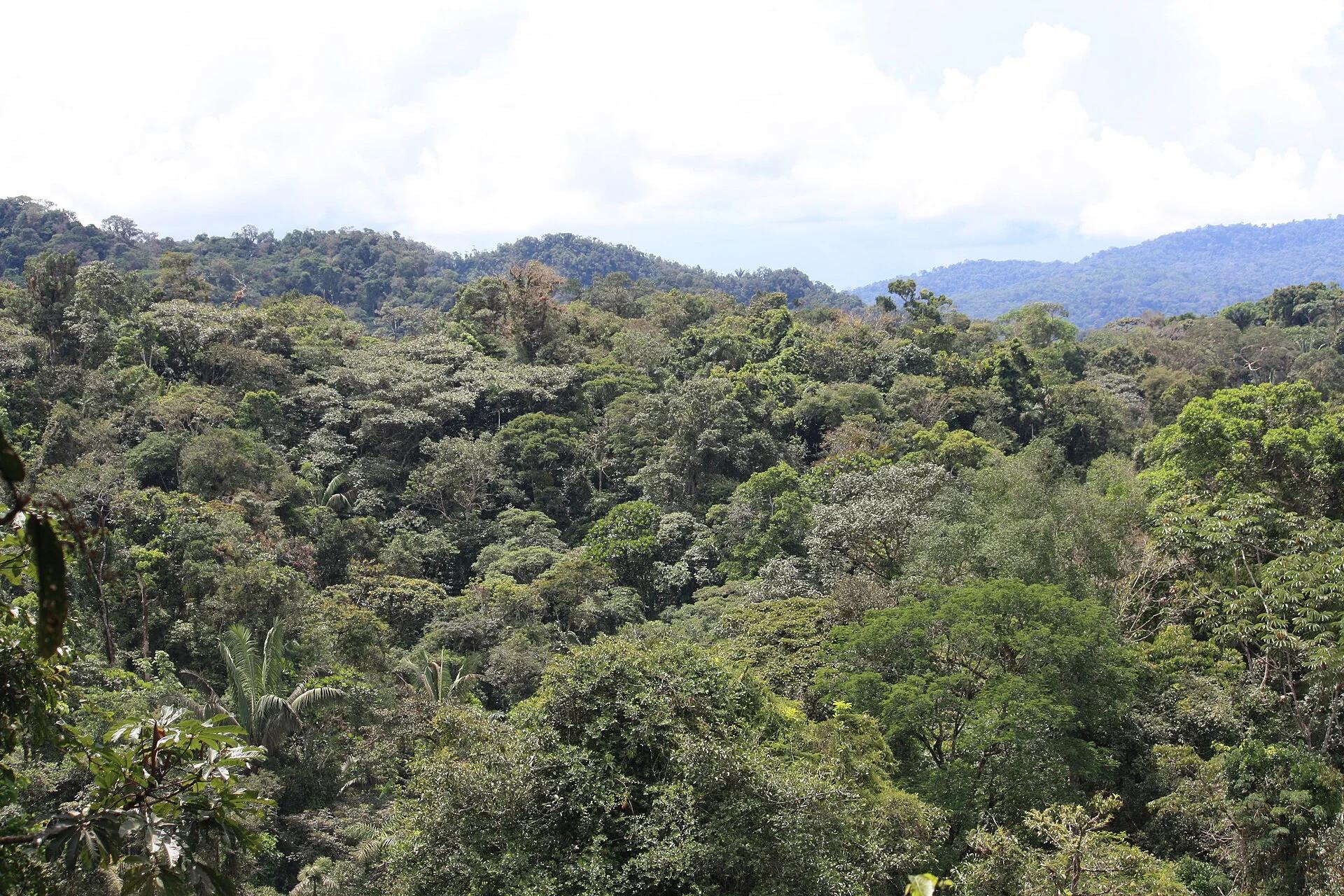
That is the premise behind Hortus Deliciarum in the Ecuadorian Amazon: securing primary forest under title and long-term custody is not philanthropy. It is holding forest with its largest trees still standing, the fraction in which a forest keeps much of its mass and all of its oldest time, and which no statistic of area records. If a hectare can lose a third of what it holds and remain, on paper, a hectare of forest, what is the hectare worth that has lost nothing? The documentation is at www.hortusdeliciarum.org
SOURCES
Peer-reviewed research — Sanchez-Martinez, P. et al., "Amazon rainforest adjusts to long-term experimental drought", Nature Ecology & Evolution 9, 970–979 (published online 15 May 2025), doi 10.1038/s41559-025-02702-x (open access); Rowland, L. et al., "Death from drought in tropical forests is triggered by hydraulics not carbon starvation", Nature 528, 119–122 (2015), doi 10.1038/nature15539; Bennett, A. C. et al., "Larger trees suffer most during drought in forests worldwide", Nature Plants 1, 15139 (2015), doi 10.1038/nplants.2015.139; Lutz, J. A. et al., "Global importance of large-diameter trees", Global Ecology and Biogeography 27, 849–864 (2018), doi 10.1111/geb.12747; Chambers, J. Q., Higuchi, N. and Schimel, J. P., "Ancient trees in Amazonia", Nature 391, 135–136 (1998), doi 10.1038/34325. Institutional monitoring — Forest Declaration Assessment 2026 and its press release, October 2026 (forestdeclaration.org). Field reporting and statements — Mongabay, "How would the Amazon react if it dried up? A 25-year-old field study has the answer", 11 November 2026, first published in Portuguese on 20 October 2026; statements by Antonio Lôla da Costa (Federal University of Pará) and Lucy Rowland (University of Exeter). Methodological note — Biomass figures are tonnes of carbon per hectare in above-ground wood, as reported in the 2025 paper, whose measurement series runs from 2002 to 2023; the duration of the experiment, the number of panels and the date of their removal are taken from the Mongabay report. The fifty percent share of biomass held by the largest one percent of trees is an average across forty-eight plots, with a hectare-scale standard deviation of twenty-six percent. The Lutz et al. abstract was consulted through its Crossref record; the full text was not opened. The Forest Declaration Assessment is compiled by a coalition of civil society and research organisations; its integrity figure refers to 2024. Photo credits — Cover: Dick Culbert, CC BY 2.0. Images 1 and 3: César Favacho, CC BY-SA 4.0. Image 2: Leonora (Ellie) Enking, CC BY-SA 2.0, cropped. Image 4: Jay, CC BY 2.0. All via Wikimedia Commons.
© Hortus Deliciarum Strategic Conservation | Amazon
This document is provided for informational purposes. Data and findings are sourced from peer-reviewed research, government records, and verified scientific publications.