

There is a form of protection that is neither signed nor enacted. It does not live in archives nor rest on paper. It is a protection that walks barefoot along the riverbanks at dawn, that can tell the sound of a chainsaw from several kilometers away, that knows how to read in the bark of a tree whether the season's hunting was prudent or excessive. It is the stewardship of the Amazonian community members — the comuneros — silent, daily, without witnesses. And it is, according to the best available evidence, the most effective protection humanity has ever managed to exert over a tropical forest.
It is worth saying plainly, because it tends to get lost among abstractions: when we speak of Indigenous peoples as guardians of the Amazon, we are not referring to a symbolic figure or a rhetorical courtesy. We are referring to a job. To an ancient craft practiced with the body.
What Those Who Stay Actually Do
In the Waorani and Kichwa communities of the Curaray and Cononaco river basins, men and women carry out permanent patrols along their rivers. They are not looking for tourists or scenery: they are looking for traces. Clandestine logging camps, foreign fishing nets, the footprints of those who enter armed to extract cedar, to hunt and sell bushmeat, to plunder what is not theirs. Each patrol is an act of voluntary vigilance that no State pays for and that no law requires of them. They do it because the territory is not, for them, a property; it is an extension of their own body, and no one allows their body to be mutilated without defending it.
The repertoire of that stewardship is astonishingly technical. Amazonian peoples practice an agroforestry that imitates the architecture of the forest rather than razing it; they hunt and fish with low-impact methods that allow populations to regenerate; they apply controlled burns that prevent great fires rather than provoking them. It is a management system fine-tuned over millennia through the only truly rigorous method that exists: the test of time and the consequence of error. What Western science calls "traditional knowledge," seen up close, is an ecological engineering of a sophistication we are only beginning to comprehend.
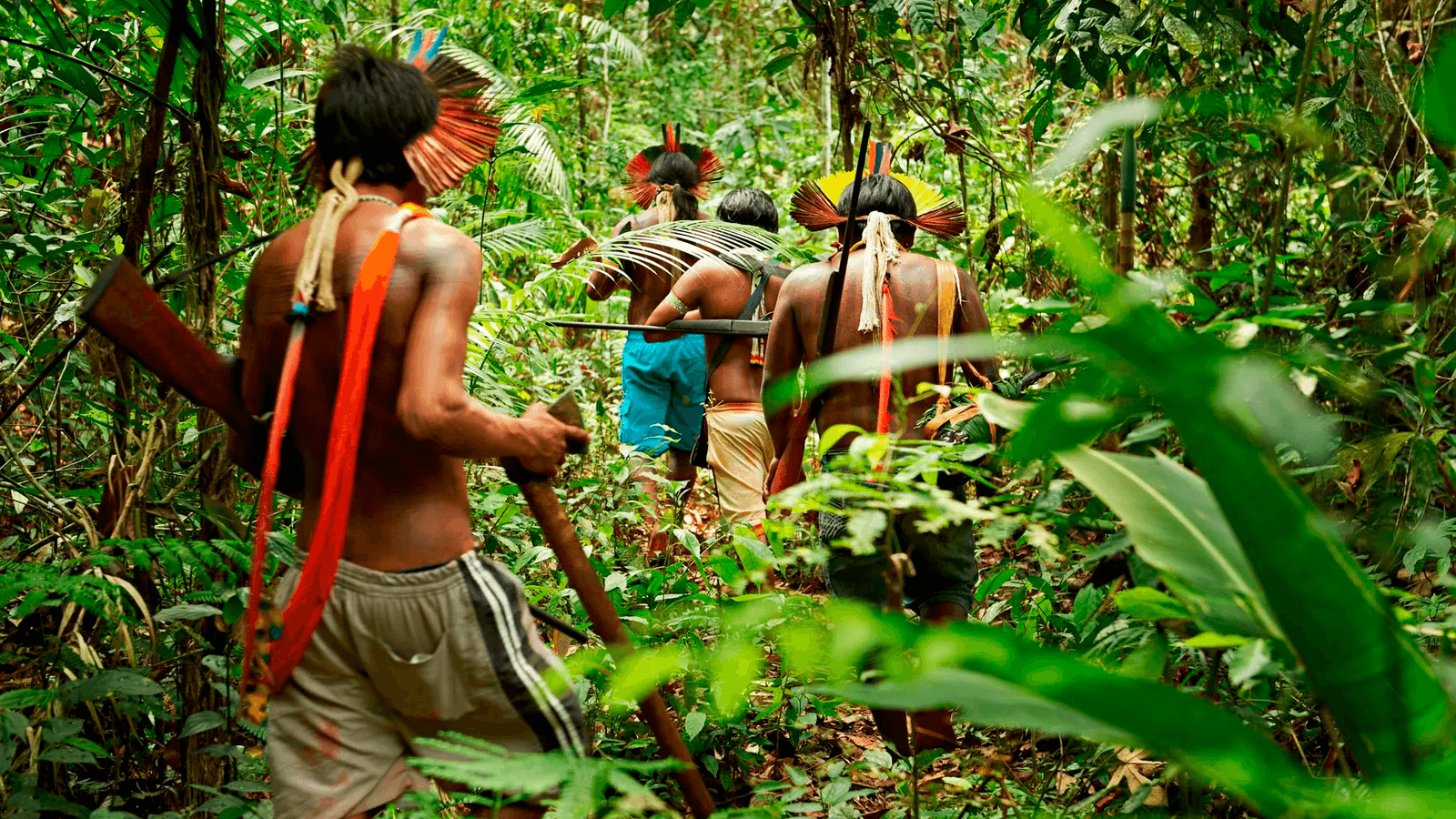
The results of that craft are measured today from space. Satellite images show that deforestation within Amazonian Indigenous territories is close to half of what occurs in the lands surrounding them. Between 2003 and 2016, those territories lost less than 0.3% of the carbon stored in their forests, compared to 3.6% in the rest of the region: a difference so wide that it ceased to be a correlation and became a demonstration. The FAO and the Fund for the Development of Indigenous Peoples, after reviewing hundreds of studies, expressed it with the sobriety of great conclusions: Indigenous and tribal peoples are, quite simply, the best guardians of Latin America's forests.
And there is a figure worth contemplating in silence before going on: these communities, a tiny fraction of the world's population, safeguard more than 80% of the biodiversity the planet has left. They do not administer it. They inhabit it.
Many Tongues, a Single Certainty
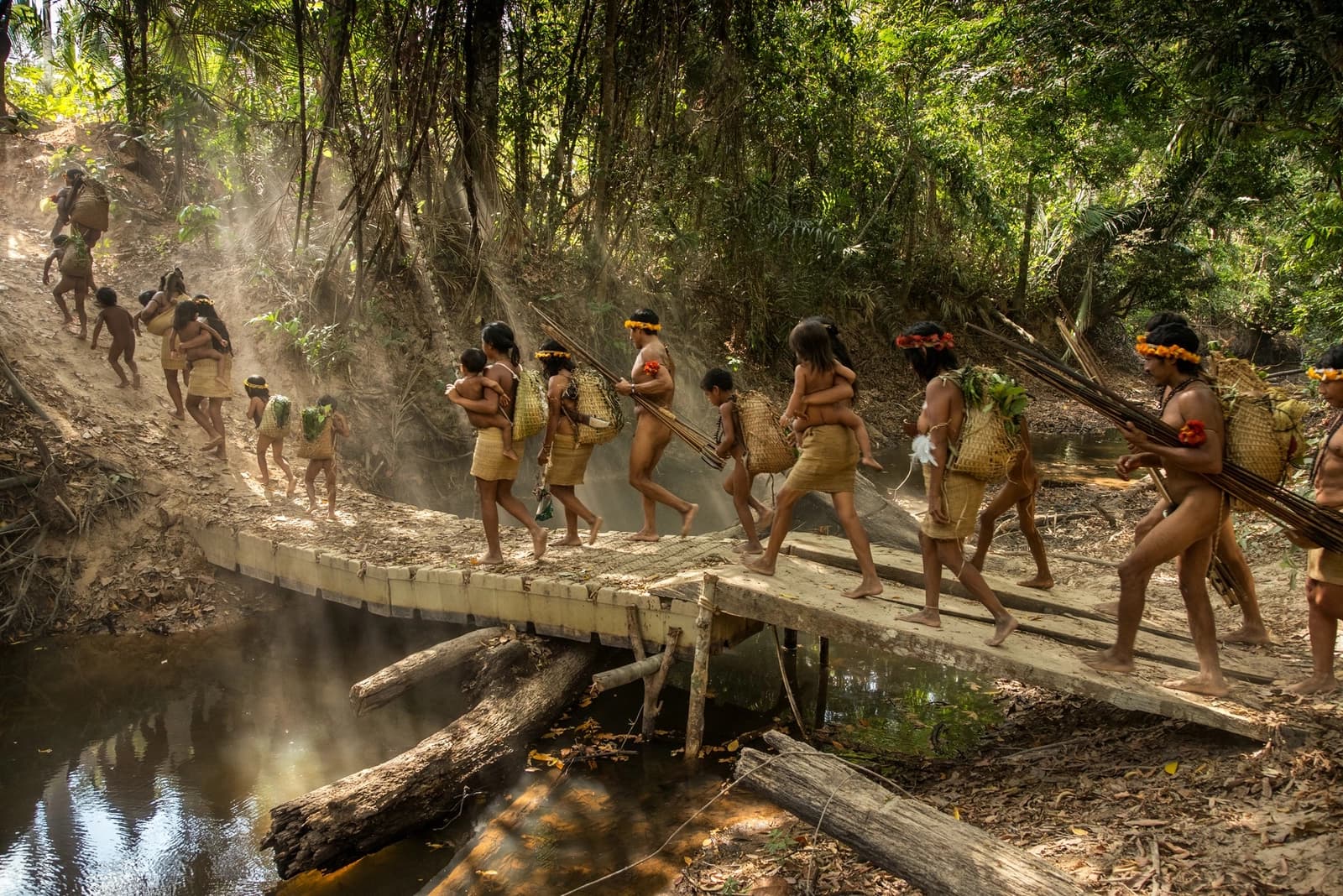
Across eastern Ecuador live nations that share neither language nor rite. The Shuar, heirs to a warrior tradition forged in the humid mountains. The Achuar, who deliberate on the basis of their dreams. The Waorani, whose skill in the forest already belongs to the realm of legend. The Amazonian Kichwa, who name the forest Kawsak Sacha — the Living Forest — because for them it is not a thing, but a being. And, in the most remote depths, the Tagaeri and the Taromenane, who exercise their most radical right: that of not being found.
Beneath that diversity beats a single operative conviction: that life is not possessed, it is cared for; that the land is not a resource, but a relative; that keeping the purest things intact is not a renunciation of progress, but the highest form of long-term intelligence. That belief is the ultimate reason why their protection succeeds where decrees fail. We defend better what we love than what we merely monitor.
The Legitimate Question: And When the System Changes?
This is where the attentive reader, with every reason, raises a hand. If stewardship depends on those who inhabit the territory, what sustains it when governments change, when laws are rewritten, when a new political cycle decides that the subsoil is worth more than the surface? Systems are mutable by nature. A protection celebrated today can be repealed tomorrow with the same signature that created it. The question is not naïve: it is the right question.
The answer lies not in a single law, but in something more resistant: the echo. When an Amazonian people defends its territory and that defense resonates beyond its borders, it ceases to be an isolated case and becomes precedent. And precedents, unlike ordinary laws, are difficult to erase. The defense by the Sarayaku people did not end in their community: it rose to an international court whose rulings bind States above any government of the moment. The Waorani victory over the oil auction of their forest did not protect only half a million acres: it became a legal shield protecting other nationalities. Each battle won is incorporated into the scaffolding of law as a rung that can no longer be removed without bringing down the entire ladder.
And that echo travels. The idea that a river, a forest, or an ecosystem can be a subject of rights — born directly from Amazonian and Andean worldviews — has today taken root in nearly forty countries. Bolivia turned it into law; Colombia's constitutional court recognized its Amazon as a subject of rights and ordered its deforestation halted; New Zealand granted legal personhood to the Whanganui River after 140 years of struggle by the Māori people; Panama and Spain followed the same path. What began as the intimate conviction of a few forest peoples has become an architecture of overlapping, redundant protections, distributed across the world. And redundancy is precisely what guarantees permanence: when one defense falls, others bear the weight. A changing system can topple a single statute; it finds it far harder to topple a global consensus already in motion.
To that legal structure has been added something no treaty ever contemplated: a worldwide community of people determined to protect these territories at all costs. Jurists, scientists, activists, institutions, and citizens who have understood that certain losses are non-negotiable, even when the price is renouncing a narrow form of "development." And the word deserves its quotation marks, because that is the true debate of our century: what do we understand by developing. Felling a primary forest to plant pasture produces a figure in the GDP and destroys a heritage of millions of years. Keeping it standing generates no immediate invoice, but it preserves the water, the climate, the species, and above all the wisdom that knows how to inhabit it without destroying it. To call only the former "development" is an accounting error that the coming generations will pay with interest.
The Arithmetic of the Irrecoverable
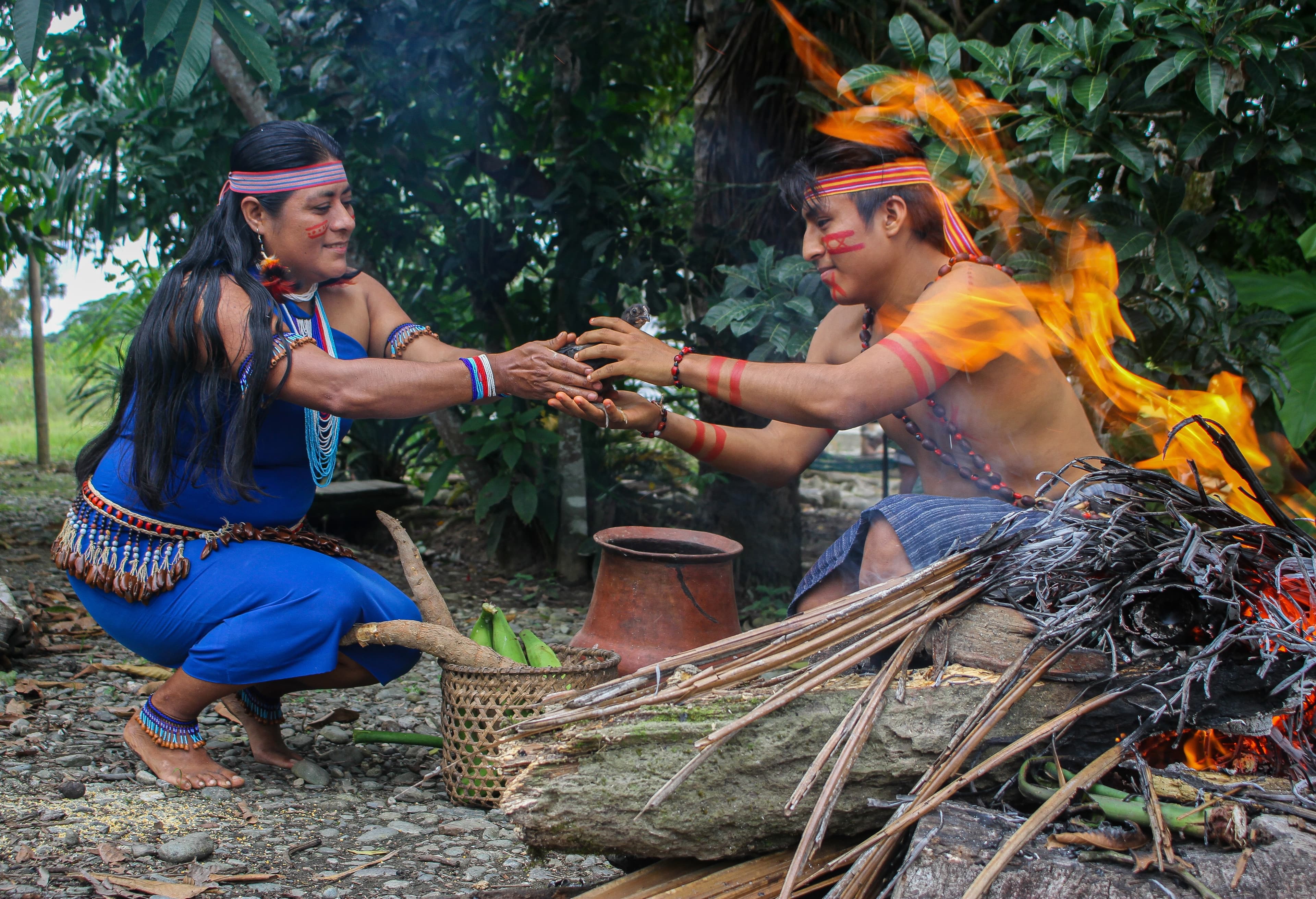
Because that is what is finally at stake, and what makes every gesture of stewardship fundamental: the irreplicable. A primary forest brought down is not rebuilt with a plantation; its architecture took millions of years to compose, and no capital buys it back. A language that goes silent carries away an entire library of knowledge about medicinal plants, rainfall cycles, and animal behavior that no institution has managed to catalog. Each community that remains is, in the literal sense, a living archive of the wisdom the world will need tomorrow and still ignores today.
That wisdom is the most valuable asset in the equation, and the most fragile. It is not reproduced in a laboratory nor restored by decree: it is transmitted from body to body, from generation to generation, on the riverbank, at dawn. When Amazonian peoples press the world to listen, they are not defending a privilege: they are offering a pedagogy. They are teaching us, with the patience of those who hold a millennia-long head start, to distinguish between what can be lost and what must never be lost.
Sources consulted:
MAAP #236 — Pasture-Driven Deforestation Grows in Conservation Areas of the Ecuadorian Amazon (Amazon Conservation, 2025).
Mongabay Latam — Ecuador: Between 2020 and 2024, an Area Equivalent to Luxembourg Was Deforested (November 2025).
Mongabay Latam Satellite Images Reveal Cattle Expansion in Sangay National Park (January 2026)
RAISG & MapBiomas Amazonía — Study presented at COP28 (2023).
Bedoya, E. et al. — Ranchers, Settlers, and the Deforestation of Primary Forests in Morona, Ecuador
. Dialnet.
© Hortus Deliciarum Strategic Conservation | Ecuadorian Amazon
This document is provided for informational purposes. Data and findings are sourced from peer-reviewed research, government records, and verified scientific publications.