

On 27 October 2026, in Geneva, the World Meteorological Organization published the twenty-second edition of its Greenhouse Gas Bulletin. The globally averaged surface concentration of carbon dioxide reached four hundred and twenty-six point eight parts per million in 2025, fifty-three percent above the pre-industrial level of 1750, measured at one hundred and seventy-nine stations of the Global Atmosphere Watch network. When the bulletin was first published, in 2004, that same network measured three hundred and seventy-seven point five. The rise from 2024 to 2025 was two point eight parts per million: above the average of the past decade, but below the anomalous jump from 2023 to 2024. The figure that matters is not the record, which has been broken every year since the series began. It is the reason the pace changed.
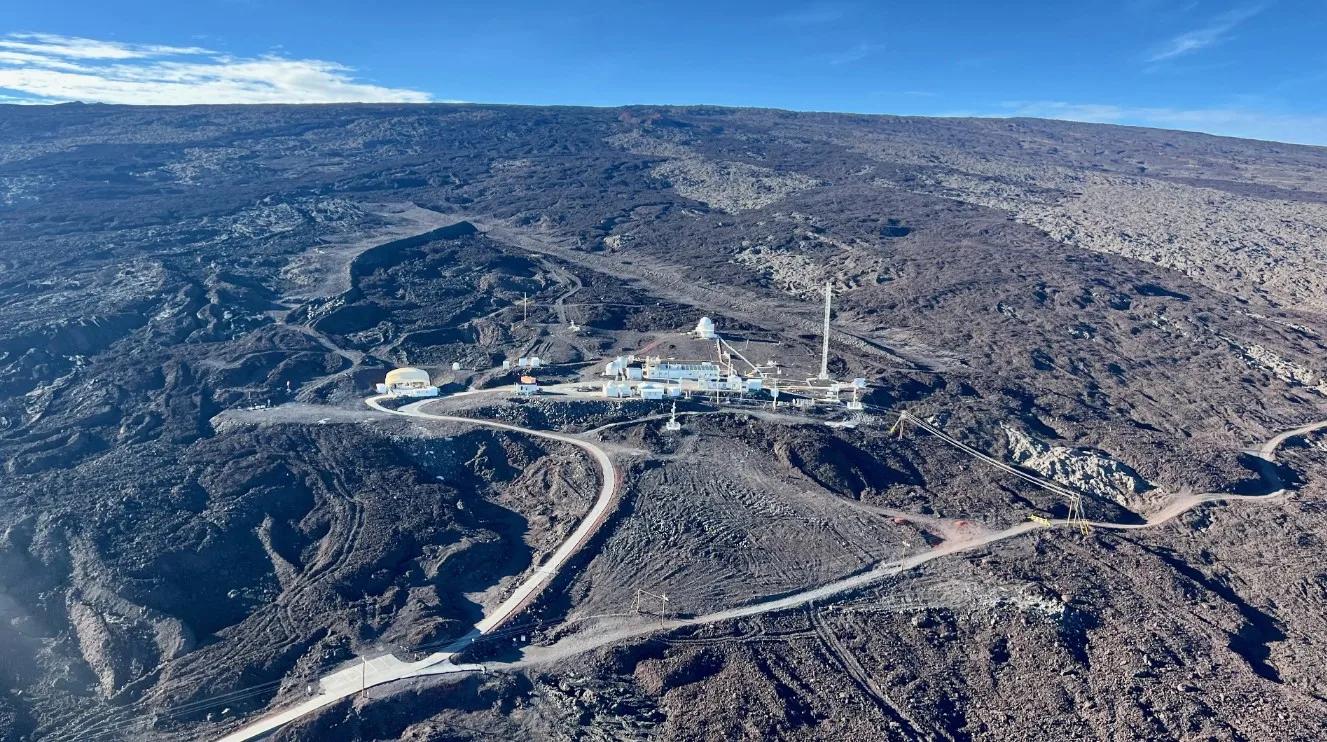
The bulletin itself explains it in one sentence: about half of the carbon dioxide emitted each year remains in the atmosphere; the rest is absorbed by the Earth's land ecosystems and oceans. The Global Carbon Budget 2025, published in May 2026 in Earth System Science Data by the Global Carbon Project consortium, quantifies it for the decade 2015 to 2024: fifty percent of emissions stayed in the atmosphere, the ocean took up twenty-nine percent and the land twenty-one. Fossil emissions, meanwhile, keep growing slowly: one point one percent in 2024 and an estimated one percent in 2025, to thirty-eight point one billion tonnes of carbon dioxide. The half that does not stay in the air is the work of two systems that send no invoice.
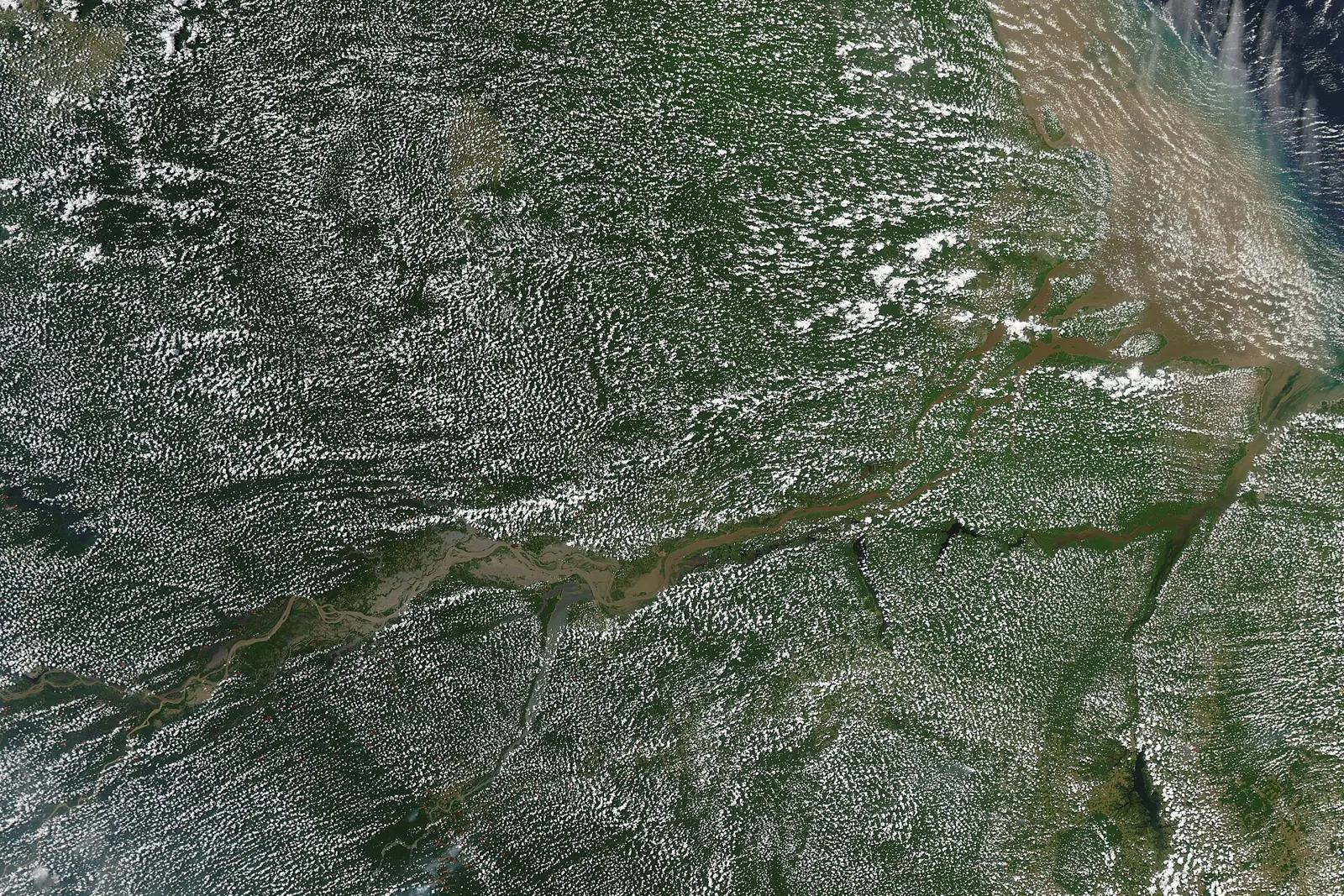
That is where the pace is explained. In 2024 the atmosphere grew by three point seven parts per million, the highest value on record, and the budget attributes it mainly to the El Niño conditions of 2023 and 2024; that year the land sink fell to one point nine billion tonnes of carbon, against a decade average of two point four billion. In 2025, according to the WMO, the more modest growth reflects the recovery of the land carbon sinks and reduced fire emissions after the strong 2023 and 2024 El Niño, which reduced the efficiency of the biosphere through more drought, drier vegetation and more wildfire. Emissions barely moved from one year to the next. The atmosphere swung by nearly a full part per million. The variable was not what was emitted; it was what was absorbed.

Where that swing took place was pinned down by a team led by Piyu Ke and Philippe Ciais using a low-latency carbon budget. In 2023 the global net land sink was zero point four four billion tonnes of carbon, the weakest since 2003; the largest abnormal loss occurred in the Amazon during the drought of the second half of the year, zero point three one billion tonnes, while Canada's fires emitted zero point five eight billion. In the update covering July 2023 to July 2024, the land sink was reduced by two point two four billion tonnes relative to the 2015 to 2022 average; the tropics accounted for ninety-seven point five percent of the anomaly, and the Amazon alone for half of it. The Global Carbon Budget adds the underlying trend: climate change and climate variability reduced the land sink by twenty-five percent and the ocean sink by seven point one percent, on average, over 2015 to 2024, through lower tropical plant productivity and higher ecosystem respiration.
The WMO does not expect a pause. It anticipates a further increase in concentrations in 2026, from fossil fuel burning and from the development of a powerful El Niño which, in the words of its scientific officer Oksana Tarasova, will impact land carbon sinks as it did in 2023 and 2024, and it warns that the risks of reduced ocean uptake are also increasing. The remaining carbon budget for a fifty percent likelihood of limiting warming to one point five degrees is, from the beginning of 2026, one hundred and seventy billion tonnes of carbon dioxide: around four years at 2025 emission levels. And carbon dioxide, the WMO's Deputy Secretary-General Ko Barrett recalled, has a very long lifetime: it will affect the climate not just for years but for decades and even centuries.
It is worth stating precisely what these figures measure and what they do not. The bulletin measures concentrations, not emissions. The land sink is not observed directly: it is a model residual with wide uncertainties, plus or minus one point one billion tonnes on the one point nine billion of 2024 in the budget's abstract, which also declares an imbalance of one point seven billion tonnes and warns that the total sink or the atmospheric growth of that year may be overestimated. The 2025 recovery, estimated at three point one billion tonnes, is preliminary: it was calculated before the year ended, and the atmospheric growth the budget projected for 2025, two point one parts per million, came in below the two point eight the WMO has just measured; the gap will not be resolved until the next update. The Ke and Ciais figures are fast-track estimates, and the one covering 2024 circulates as a preprint. The twenty-five percent, finally, combines climate change with natural variability; the budget does not separate them. None of this changes the direction of the finding. It does bound its precision.
COP31 meets in Antalya from 9 to 20 November to negotiate the flow: how many tonnes each country will emit, and in which year. No one negotiates the half. Absorption capacity is neither a policy nor a pledge; it is an inherited stock whose efficiency, as three years of data have just shown, can vary more in a single year than global emissions changed over the same period. In the climate's ledger, every tonne emitted has an owner's column; the tonnes absorbed have none. And yet that ownerless column moved the global number more than everything else. The structural difference is simple. The flow can be built, reduced or traded. The stock that does the work of the half cannot be built at that scale. It can only be kept.
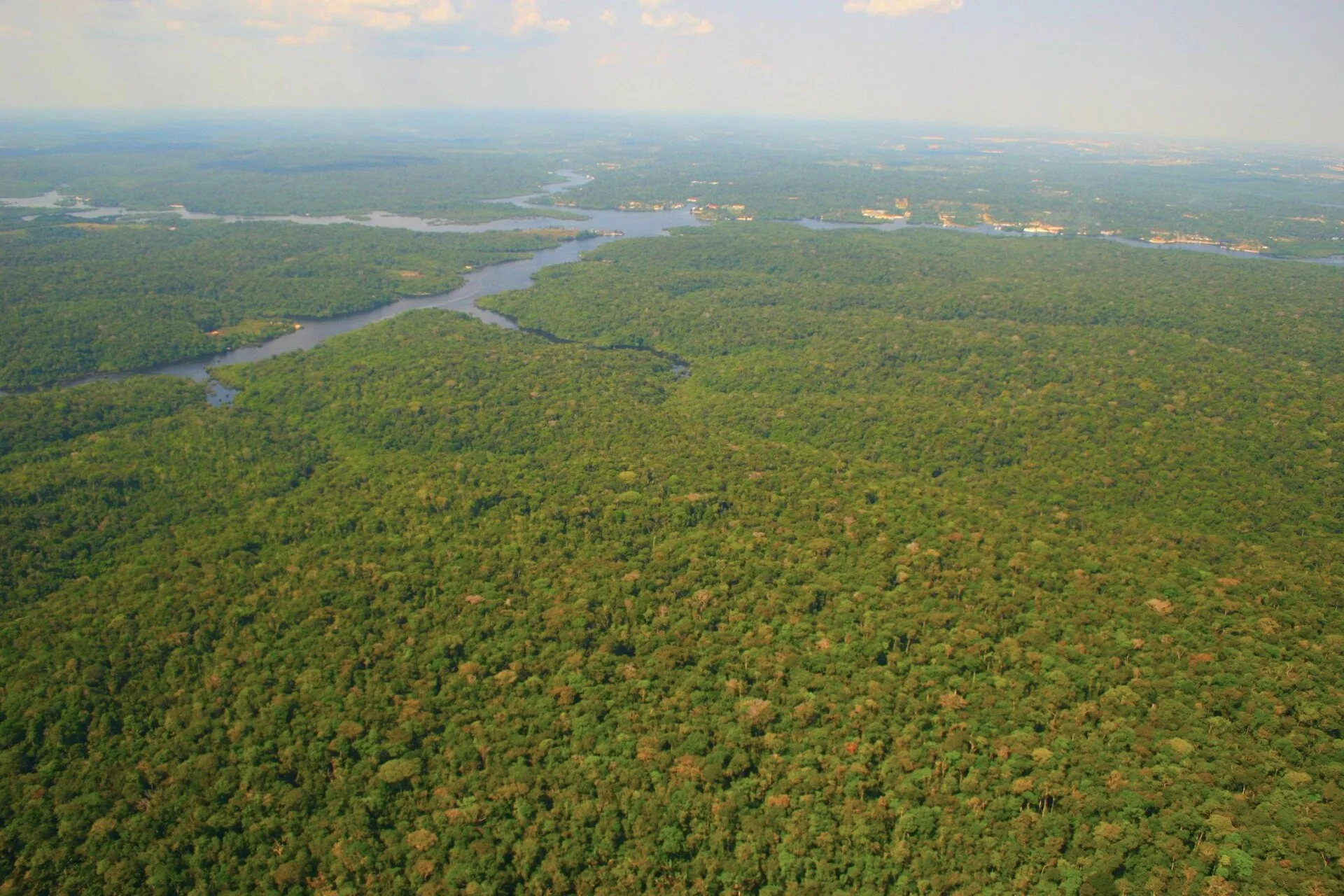
That is the premise behind Hortus Deliciarum in the Ecuadorian Amazon: securing primary forest under title and long-term custody is not philanthropy. It is holding, hectare by hectare, a verifiable share of the half the planet absorbs without anyone sending an invoice. If the atmosphere registers within months what happens to the tropical forest, what is the hectare worth where nothing happens? The documentation is at www.hortusdeliciarum.org
SOURCES
Institutional monitoring — World Meteorological Organization, Greenhouse Gas Bulletin No. 22 and press release "Greenhouse gas levels once again reach record high", Geneva, 27 October 2026; Global Atmosphere Watch network (one hundred and seventy-nine stations). Peer-reviewed research — Friedlingstein, P. et al., "Global Carbon Budget 2025", Earth System Science Data 18, 3211–3288, 13 May 2026, doi 10.5194/essd-18-3211-2026 (open access); Ke, P., Ciais, P. et al., "Low latency carbon budget analysis reveals a large decline of the land carbon sink in 2023", National Science Review (2024), consulted in the authors' preprint arXiv 2407.12447; Ke, P., Ciais, P. et al., "Low latency global carbon budget reveals a continuous decline of the land carbon sink during the 2023/24 El Niño event", preprint arXiv 2504.09189 (2025). Regulatory framework and calendar — UNFCCC, thirty-first Conference of the Parties (COP31), Antalya, 9 to 20 November 2026. Statements — Ko Barrett, WMO Deputy Secretary-General, and Oksana Tarasova, WMO scientific officer, press release of 27 October 2026. Methodological note — Sink and budget figures are given in tonnes of carbon, not carbon dioxide (conversion factor three point six seven); the uncertainty of the 2024 land sink appears as plus or minus one point one in the budget's abstract and plus or minus zero point eight in its executive summary; the budget's 2025 sink and atmospheric growth values are preliminary estimates made before the year closed; the published version of Ke et al. (2024) could not be opened and the authors' arXiv text was cited; the 2024/2025 update is a preprint without confirmed peer review. Photo credits — Cover: Neil Palmer / CIAT, CC BY-SA 2.0. Image 1: Brian Vasel / NOAA, public domain. Image 2: Judison Godinho de Sousa, CC BY 4.0. Image 3: NASA / Jeff Schmaltz, MODIS, public domain, cropped. Image 4: James Martins, CC BY 3.0. All via Wikimedia Commons.
© Hortus Deliciarum Strategic Conservation | Amazon
This document is provided for informational purposes. Data and findings are sourced from peer-reviewed research, government records, and verified scientific publications.