

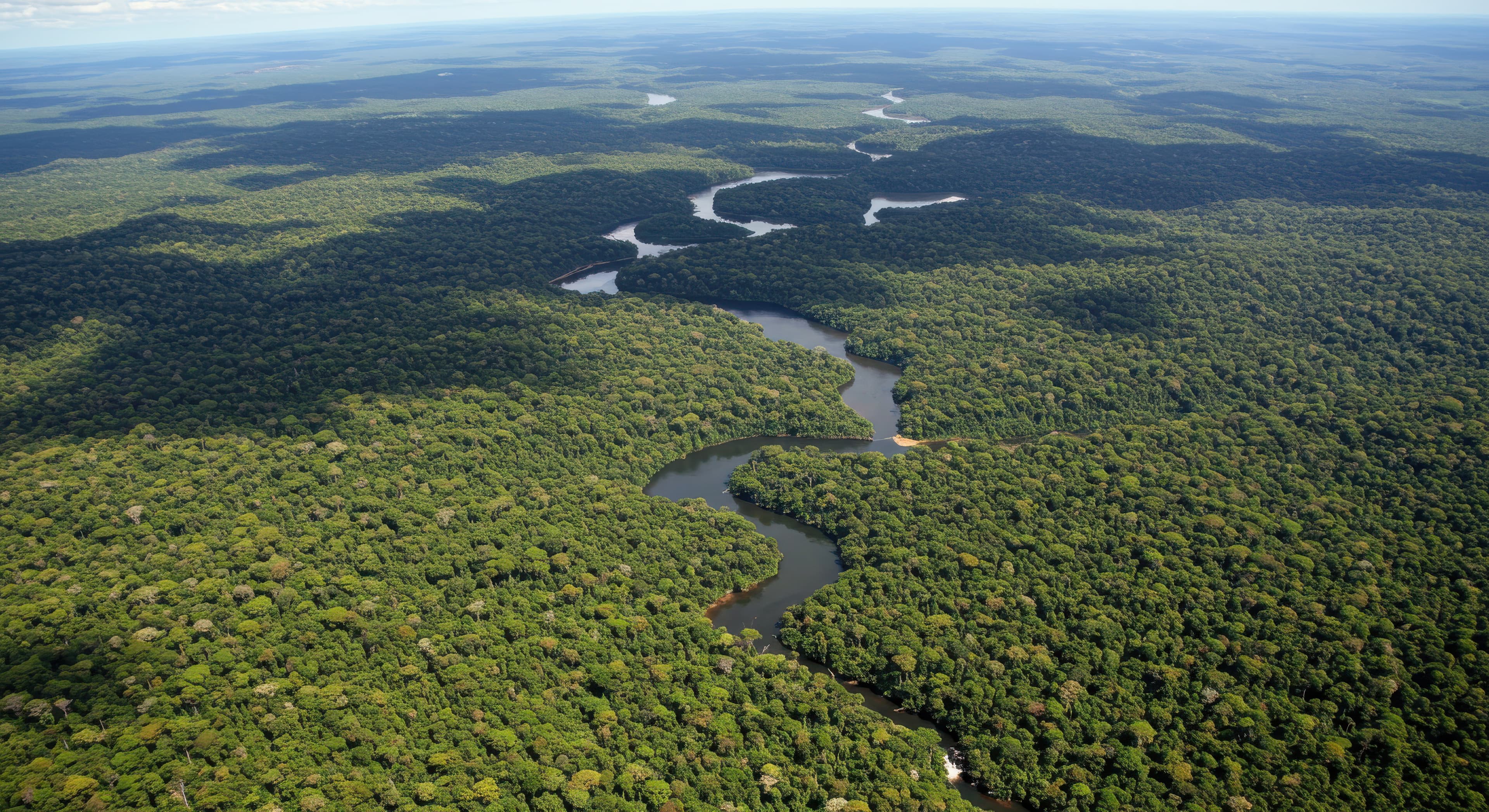
In every legal system on the planet, nature is property. It can be owned, sold, exploited, and discarded. Courts exist to resolve disputes between people about nature, never to defend nature itself. No legal framework treats a river as something that has standing, a forest as something that has rights, or an ecosystem as something that can be represented in court.
Except one.
In 2008, Ecuador became the first country in the world to recognize nature as a subject of constitutional rights. Not through a law passed by congress, which a future congress could repeal. Not through a court ruling, which a future court could reinterpret. Through its constitution, the supreme legal instrument a nation possesses, approved by 63% of Ecuadorians in a national referendum on September 28, 2008.
Chapter 7, Articles 71 through 74 establish that nature, referred to in the text as Pacha Mama, holds the right to integral respect for its existence, the right to maintain and regenerate its life cycles, structure, functions and evolutionary processes, and the right to be restored when damaged. Article 10 goes further: it grants any person, community, people or organization the authority to petition a court on nature's behalf. The forest does not need to own itself. Anyone can defend it.
This was not an imported idea. It did not emerge from a European policy institute or an international treaty negotiation. It came from the indigenous cosmovisión of the Andean peoples, from two principles that have structured life in this territory for millennia. Pachamama, the understanding that the Earth is a living entity with inherent dignity, not a resource waiting to be extracted. And Sumak Kawsay, the Kichwa principle of harmonious coexistence, the conviction that human prosperity cannot be separated from the health of the natural systems that sustain it. Ecuador's largest indigenous federation, CONAIE, lobbied for a constitution that would encode these principles into the highest law of the land. They succeeded. What had governed life in the Amazon for thousands of years became constitutional doctrine.

The question that follows any legal innovation is whether it survives contact with reality. Ecuador's framework has been tested repeatedly, and it has held.
In the Los Cedros case, Ecuador's Constitutional Court ruled that mining and all extractive activity is permanently prohibited within the Los Cedros Protected Forest. The court did not balance economic interests against environmental ones. It ruled that the constitutional rights of nature made extraction impermissible. Spectacled bears, spider monkeys, and hundreds of endemic species in that forest now have a legal shield that no corporate license can override.
In Intag, a Provincial Court revoked the environmental license of Codelco, a multinational copper mining corporation, after two frog species previously believed extinct were discovered in the cloud forest Codelco intended to exploit. A mining operation backed by one of the largest copper companies on Earth was stopped by two frogs, because the constitution gave those frogs standing.
In 2023, Ecuadorians voted in a national referendum to permanently halt oil extraction in Yasuní National Park, one of the most biodiverse places on the planet. A country whose largest export is crude petroleum chose, by popular vote, to leave the oil in the ground. The constitutional framework made that vote possible, and the result is binding.
These are not symbolic outcomes. They are enforceable legal precedents that have stopped multinational operations, revoked corporate extraction licenses, and established a body of jurisprudence that strengthens with each ruling. When the United Nations Secretary-General António Guterres declared in 2019 that Earth Jurisprudence is the fastest-growing legal movement of the twenty-first century, Ecuador's constitution was the origin point he was referencing.

To understand why this matters beyond Ecuador, it is necessary to see where it sits in the global hierarchy of legal protection for nature. Ecuador is the only country operating at the constitutional level, the most permanent and most difficult legal threshold to modify. Changing the constitution requires a national referendum or a constituent assembly, processes that demand broad popular consensus and cannot be executed by a single administration. Bolivia and New Zealand have recognized rights of nature through ordinary legislation, laws that carry legal weight but that a parliamentary majority can amend or repeal at any time. India and Colombia have done so through court rulings, precedents that hold unless future courts reinterpret them. No other jurisdiction on Earth matches the structural permanence of what Ecuador established in 2008.
For anyone evaluating land as a long-term asset, this legal architecture is not a footnote. It is the foundation.
A titled property in the Ecuadorian Amazon is protected at three simultaneous levels. First, private property rights under Ecuadorian civil law, the same framework that protects titled assets in any jurisdiction. Second, the Organic Code of the Environment, Ecuador's regulatory framework for conservation and land use. Third, and unique to Ecuador, the constitutional rights of nature as the supreme legal ceiling, a standard that sits above all legislation, all regulation, and all government action. Even if a future administration attempted to weaken environmental policy, the constitutional rights of nature would remain as the highest legal standard, challengeable by any person or organization before the Constitutional Court.
This triple-layered architecture does not exist anywhere else in the world. It means that permanently conserved land in Ecuador carries a level of legal protection that no other jurisdiction can offer, a fact that becomes more significant as international regulation moves in the same direction. The EU Deforestation Regulation is tightening supply chain accountability. Institutional investors are integrating nature-related risk into their frameworks. The Tropical Forests Forever Facility committed one hundred and twenty-five billion dollars at COP30 in Belém. The global trajectory is toward more protection, harder enforcement, and greater financial recognition of intact ecosystems.

Ecuador arrived at this conclusion in 2008. The rest of the world is still catching up.
What makes this framework extraordinary is not just its legal mechanics but what it represents philosophically. For the entirety of modern legal history, nature has existed in courtrooms only as the subject of human disputes. Two parties argue about what to do with a piece of land, a body of water, a mineral deposit. Nature is the object, never the plaintiff. Ecuador's constitution inverted that relationship. Nature became the entity with rights. Humans became the ones with the responsibility to uphold them. A river can now be defended in court not because someone owns it, but because it exists. A forest can be protected not because it generates revenue, but because it has the constitutional right to maintain its life cycles.
© Hortus Deliciarum Strategic Conservation | Ecuadorian Amazon
Contac: info@hortusdeliciarum.org
This document is provided for informational purposes. Data and findings are sourced from peer-reviewed research. Hortus Deliciarum does not provide investment advice. Readers should conduct independent due diligence.