

On 10 November 2026, the Global Carbon Project published its Global Carbon Budget for the year, the work of more than one hundred and forty scientists. The headline was a fall: fossil carbon dioxide emissions are projected to decline by zero point four percent in 2026, to thirty-eight point two billion tonnes. Further down the list of findings sat a smaller figure, given in a unit the report does not normally use. All the novel carbon dioxide removal operating on Earth, it notes, offsets less than thirty minutes of a year's fossil emissions.
Novel removal is the report's term for everything that takes carbon out of the air by means other than growing forests. Most of it still passes through plants: biochar, and bioenergy whose emissions are captured and stored, together accounted for about two point two million tonnes of carbon dioxide in 2025. The methods that involve no vegetation at all, and move carbon from the atmosphere directly into rock or water, amounted to about eleven thousand tonnes, chiefly through enhanced rock weathering and the alkalinity enhancement of water bodies. Direct air capture with storage, the technology that has drawn most of the attention, contributed roughly one and a half thousand tonnes.

The same budget measures the conventional kind. Reforestation and afforestation, the planting of forest where it had been cleared or had never stood, removed about two point two billion tonnes of carbon dioxide a year over the decade from 2016 to 2025, and the report states that they constitute most of all current removal. The two figures share their digits and differ by three orders of magnitude: planted forest removes about a thousand times what every novel method removes together. Expressed in the report's own unit, planting is worth about three weeks of fossil emissions.
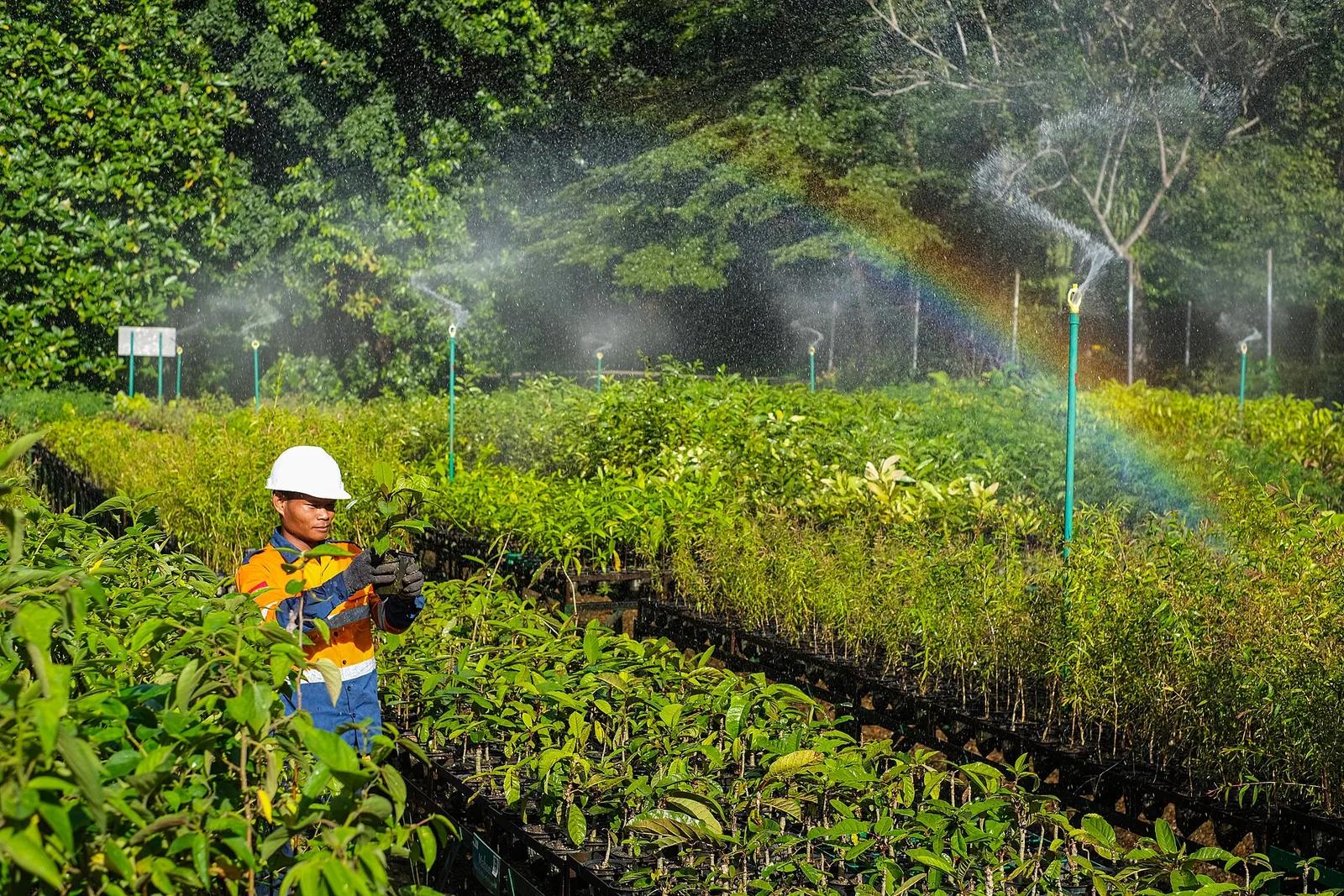
Three weeks would be a meaningful contribution if it were a net one. It is not. Emissions from permanent deforestation remained at around three point eight billion tonnes of carbon dioxide a year over the same decade, and permanent removals through new forest offset only around half of them. Julia Pongratz of Ludwig Maximilian University of Munich, one of the budget's authors, put it in a sentence: afforestation and reforestation already remove substantial amounts, but these gains are still more than offset by emissions from deforestation, and novel carbon removal remains very limited. The year itself illustrates the point. Fossil emissions are projected to fall in 2026, and total emissions to rise all the same, from forty-two point eight to forty-three point three billion tonnes, because emissions from land use are expected to climb to five point one billion, driven by peat fires and forest degradation in Southeast Asia under the drier conditions of an emerging El Niño.
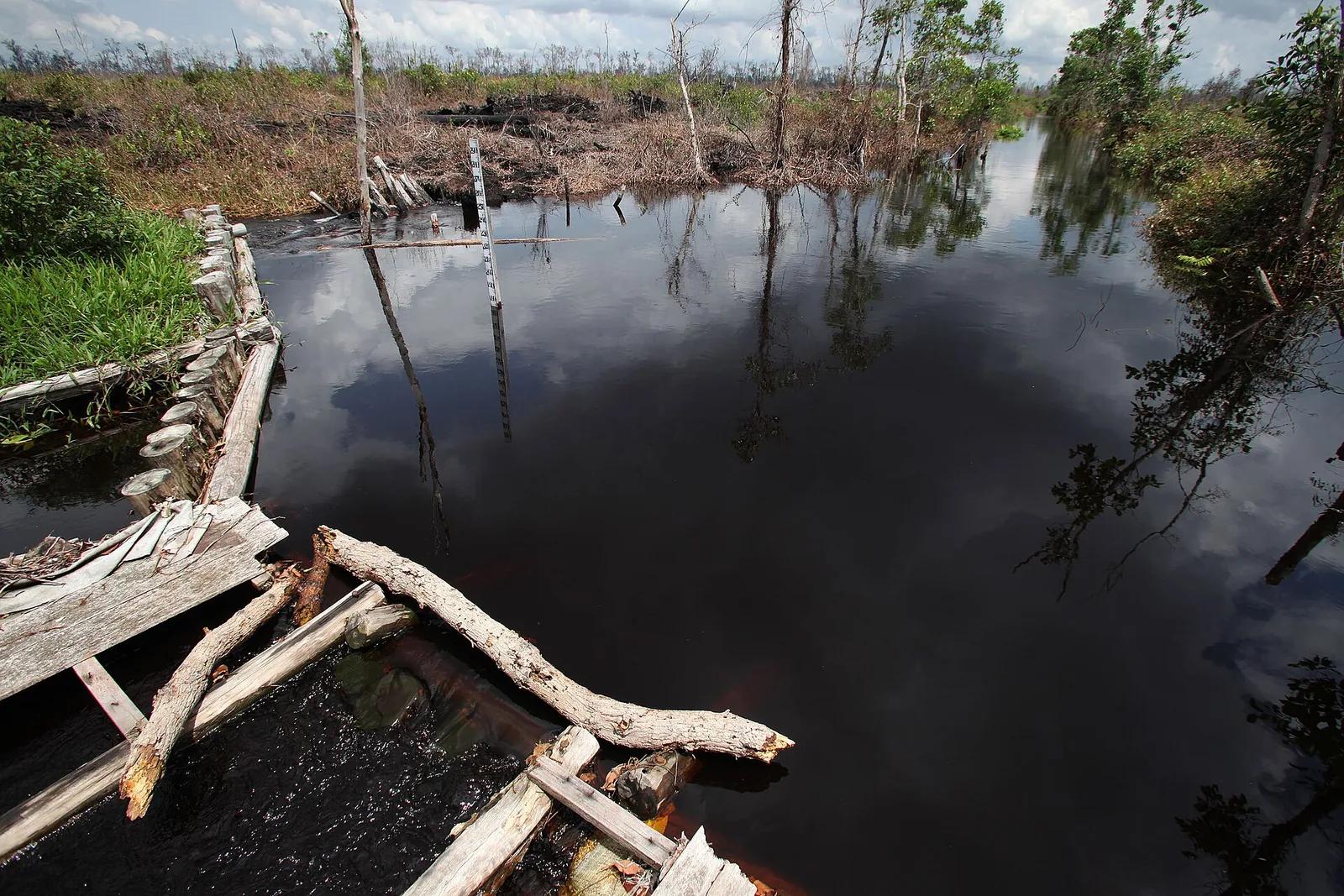
The authors draw the conclusion themselves, in the measured language of a carbon ledger. Having separated land emissions into their component flows, they observe that permanent deforestation is the largest of them, and that it could largely be halted without compromising the carbon uptake of forests. The largest single entry on the land side of the budget, in other words, is not something to be done. It is something to stop doing. The margin for error is stated alongside: the remaining carbon budget for an even chance of holding warming to one point five degrees is one hundred and fifty billion tonnes, less than four years at the current rate.
It is worth stating precisely what these comparisons can bear and what they cannot. Novel removal is an industry in its first years, its figures rest on what projects disclose through registries, and the report warns that the 2025 estimate may rise as late data arrive. A tonne mineralised in rock is not equivalent to a tonne held in a tree: geological storage lasts far longer, and forests burn. The models behind the reforestation figure do not count fires, storms or insect outbreaks, and may therefore overstate what planting removes. None of the three magnitudes replaces the reduction of the thirty-eight billion tonnes that fossil fuels still emit; the report itself notes that this year's decline owes something to a geopolitical shock and that clean energy is not yet growing fast enough to make it durable. The budget is a preprint under open review, and its 2026 values are projections made before the year has ended.
And there the reading reorders itself. The budget contains, without setting them side by side, three ways of dealing with carbon that is or could be in the air. What can be built removes thirty minutes. What can be planted removes three weeks. What is cleared each year releases more than both together. The order is not a judgement on engineering or on planting, each of which will be needed. It is an observation about where the quantities are. Removal is something one does, and it scales at the speed of construction or of growth. A standing forest is something one has, and its contribution to the ledger consists in the entry that never appears.
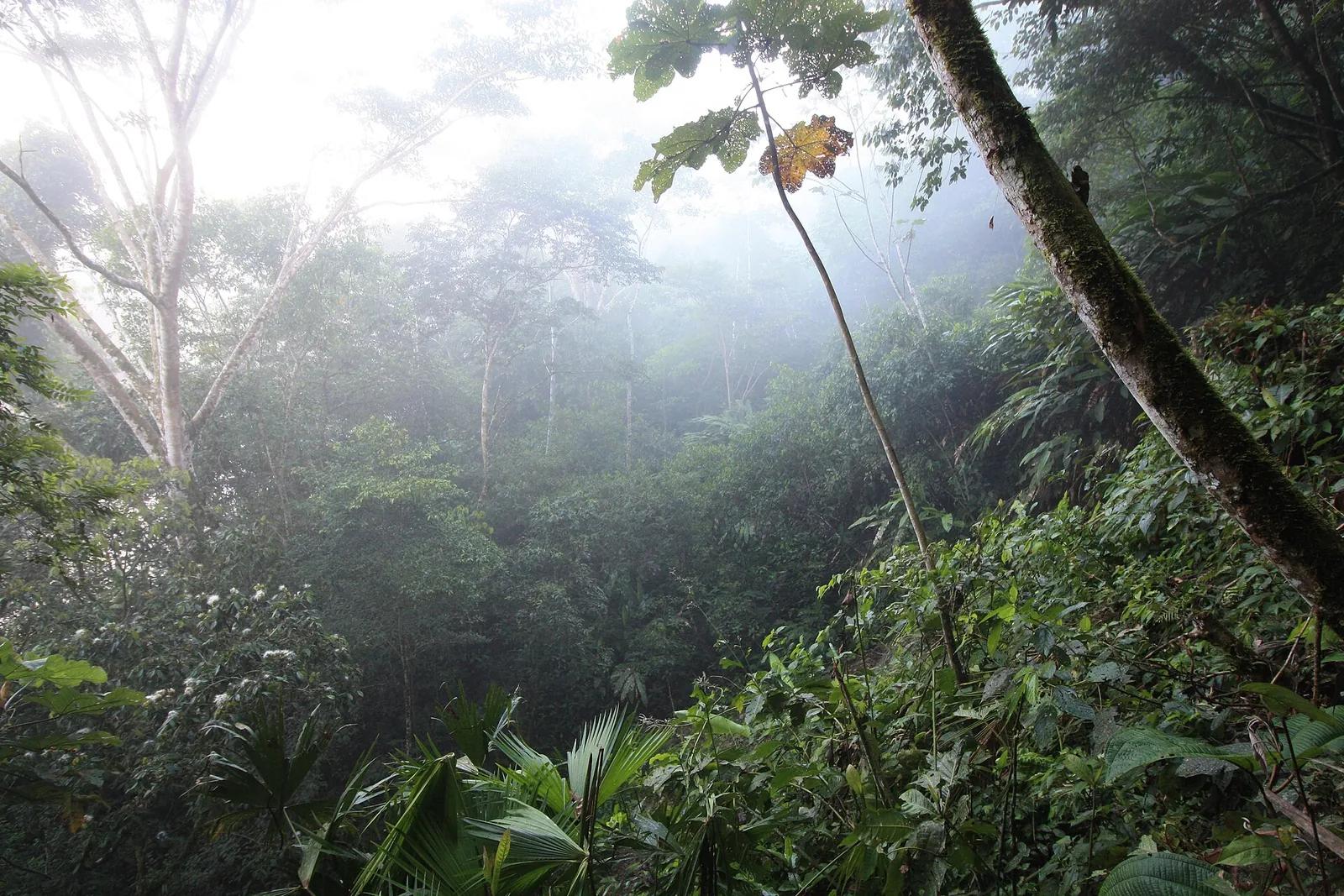
That is the premise behind Hortus Deliciarum in the Ecuadorian Amazon: securing primary forest under title and long-term custody is not philanthropy. It is holding carbon that is already stored, in a ledger where everything built to bring it back is still counted in minutes. If thirty minutes is what the world has managed to build, what is the value of what it does not have to build? The documentation is at www.hortusdeliciarum.org
SOURCES
Peer-reviewed research — Friedlingstein, P. et al., "Global Carbon Budget 2026", Earth System Science Data Discussions, preprint, discussion started 10 November 2026, doi 10.5194/essd-2026-895 (open access). Announcements — University of Exeter, "Fossil CO2 emissions decrease in 2026", press release of 10 November 2026, including the statement by Professor Julia Pongratz. Methodological note — The budget reports removal in tonnes of carbon; the figures here are converted to carbon dioxide at a factor of three point six six four. The thirty-minute figure is the report's own. The equivalence of about three weeks for reforestation, and the ratio of about one thousand to one, are this article's arithmetic from the report's central values, whose stated range for reforestation is zero point four to zero point seven billion tonnes of carbon a year. The figure for permanent deforestation and its offset by around half are taken from the press release; the abstract gives a broader measure, in which regrowth including shifting cultivation offsets more than two thirds of emissions from clearing. The underlying compilation of novel removal data, cited by the budget as Smith et al. and Edwards et al. (2026), was not consulted. Photo credits — Cover, Amazon rainforest from the air: Neil Palmer/CIAT, CC BY-SA 2.0, cropped. Direct air capture unit on public display: TRx340, CC BY-SA 4.0. Tree nursery, Indonesia: Mamansukirman06, CC BY-SA 4.0. Degraded peat forest, Kalimantan: Josh Estey/AusAID, CC BY 2.0. Amazon rainforest in Tena, Ecuador: Jay, CC BY 2.0. All via Wikimedia Commons.
© Hortus Deliciarum Strategic Conservation | Amazon
This document is provided for informational purposes. Data and findings are sourced from peer-reviewed research, government records, and verified scientific publications.