

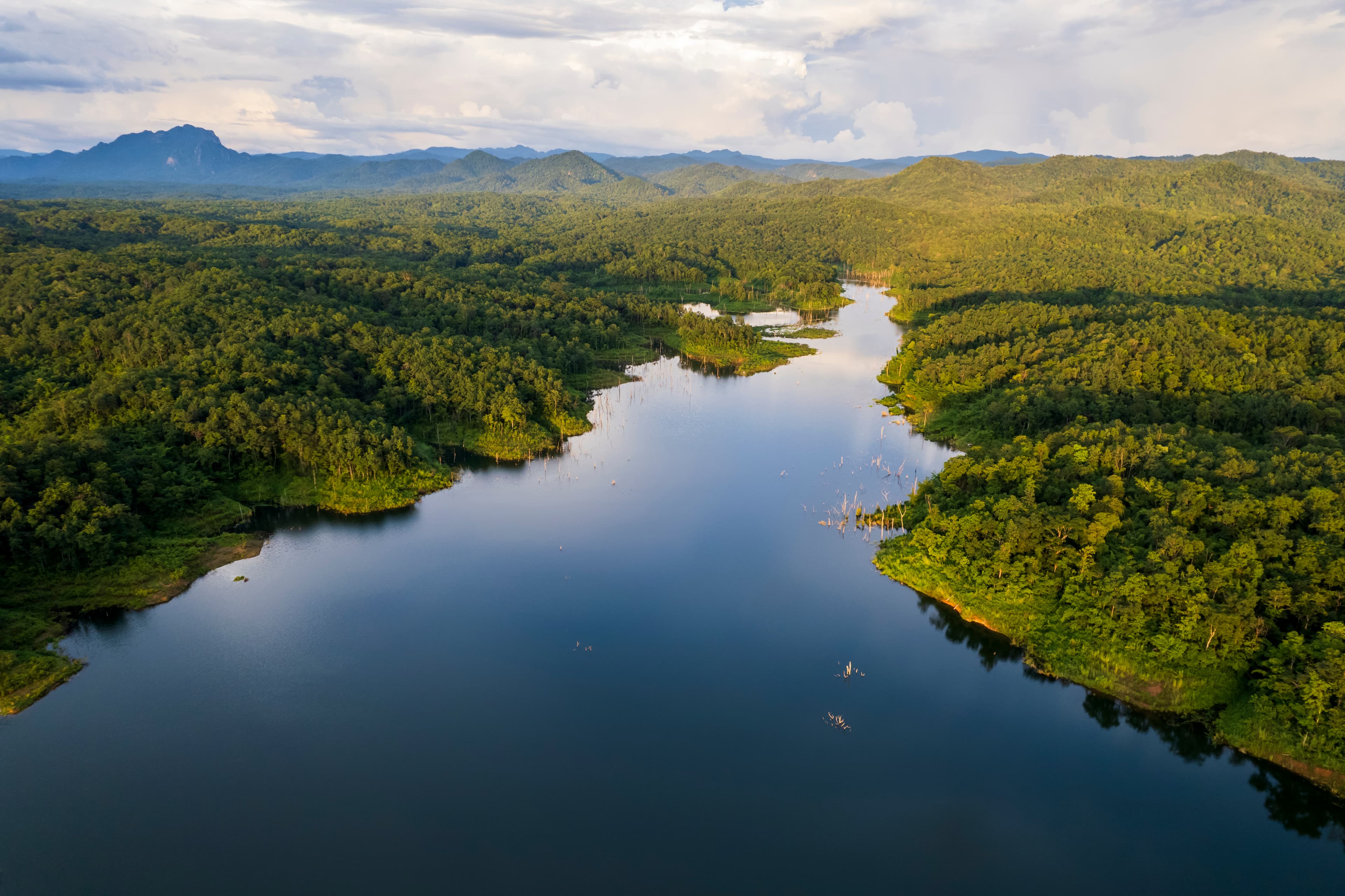
There is one predator in the Ecuadorian Amazon that no other animal hunts. It does not hide. It does not flee. It sits at the top of the most complex food web on Earth and has occupied that position for longer than any human civilization has existed.
The harpy eagle is the largest and most powerful raptor in the Americas. Its wingspan reaches seven feet. Its talons, measuring up to five inches, are the size of a grizzly bear's claws. It hunts monkeys, sloths, and other canopy-dwelling mammals at speeds and with a precision that no other bird of prey in the Western Hemisphere can match. It flies between branches in dense primary forest with an agility that seems impossible for its size, navigating a vertical world of layered vegetation that most predators cannot access.
In the Ecuadorian Amazon, the harpy eagle inhabits the lowland forests that stretch from the Andean foothills to the borders of Yasuni, one of the most biodiverse places on the planet. Ecuador's Harpy Eagle Conservation Program, led by Dr. Ruth Muniz Lopez since 2001, has spent more than two decades monitoring nests, placing satellite transmitters on individuals, and working alongside indigenous and local communities to protect breeding sites. The program has confirmed what field biologists have long understood: where continuous primary forest remains intact in the Ecuadorian Amazon, the harpy eagle persists. Where that forest fragments, it disappears.
The species mates for life. A single pair will use the same nest for two to three decades, building a structure up to six feet in diameter in the crown of the tallest emergent trees, often ceiba or kapok, at heights exceeding forty meters. The pair raises only one chick at a time, investing two full years in its development before breeding again. This reproductive strategy is among the slowest of any raptor on Earth. It is also one of the most vulnerable to disruption. Remove the nest tree, and you remove a generational breeding site. Fragment the surrounding forest, and you eliminate the territory a single pair needs, which can exceed ten thousand acres of uninterrupted canopy.
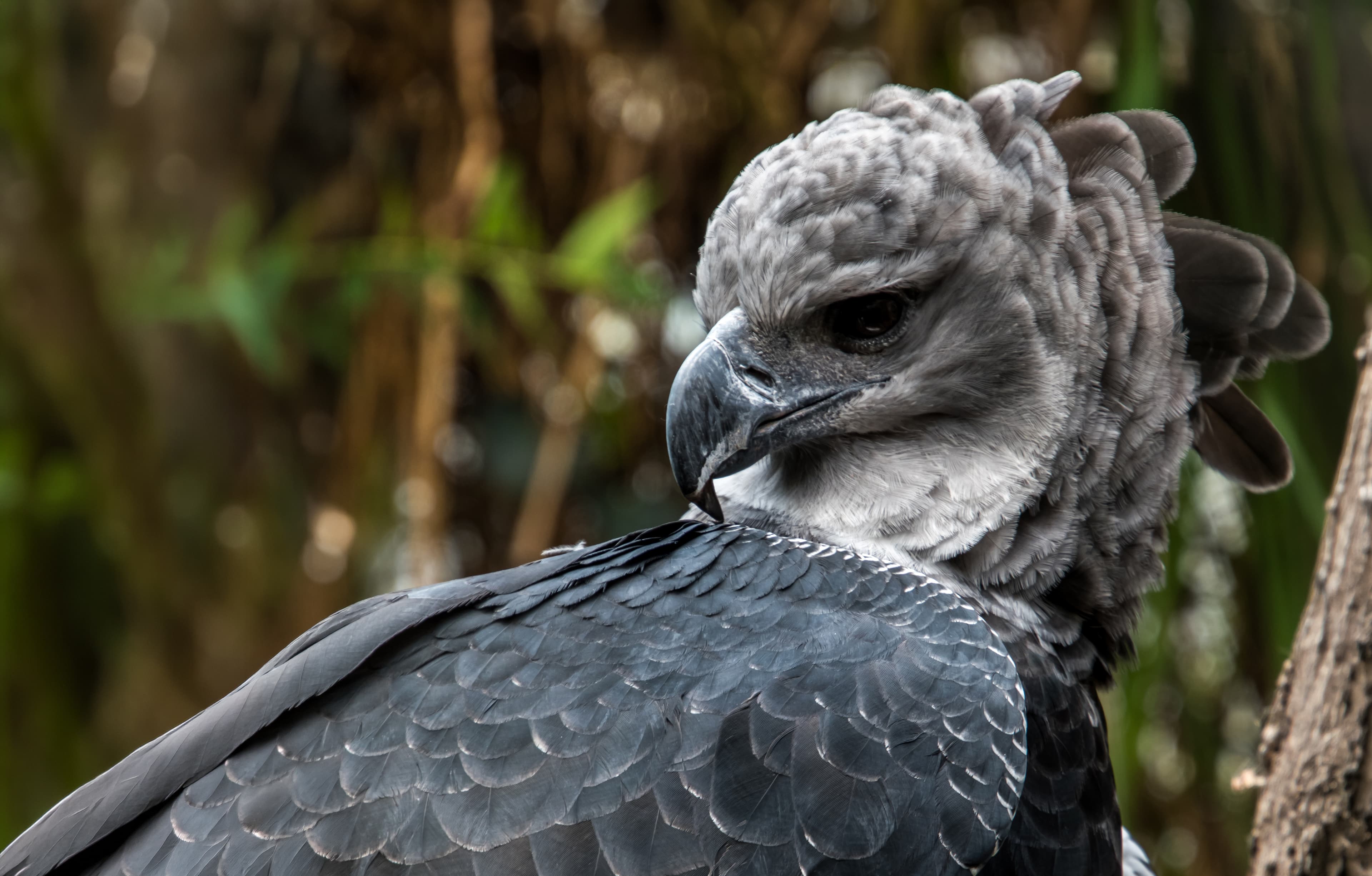
This is why the harpy eagle is not simply a species. It is a diagnostic instrument. Its presence in a forest confirms that the ecosystem is structurally intact, that the canopy is continuous, that prey populations are healthy, that the food web is functioning from the ground to the emergent layer. Ecologists classify it as both a keystone predator and an umbrella species: achieving conservation for the harpy eagle effectively achieves conservation for virtually all biodiversity in the ecosystem it inhabits.
Its absence confirms the opposite.
The harpy eagle once ranged from southern Mexico to northern Argentina. Since the nineteenth century, its range has contracted by more than forty percent. It is functionally extinct in El Salvador and nearly gone from Central America. In Brazil, it was effectively eliminated from the Atlantic rainforest and persists in meaningful numbers only in the most remote areas of the Amazon basin. The International Union for Conservation of Nature classifies it as Near Threatened, though researchers working in the field argue that this designation understates the severity of the decline across fragmented landscapes.
The primary threat is not hunting, though hunting persists. The primary threat is the disappearance of primary forest. The harpy eagle cannot adapt to degraded habitat. It cannot nest in secondary growth. It cannot hunt in open pasture. It requires exactly what is becoming rarest on Earth: large, uninterrupted tracts of virgin rainforest with mature emergent trees and a functioning canopy ecosystem. Every hectare of primary forest that is cleared, burned, or fragmented reduces the territory available to a species that already operates at extremely low population densities across an enormous range.
Ecuador offers this species something no other country can. As the only nation in the world where nature holds constitutional rights, enshrined in Articles 71 through 74 since 2008, Ecuador provides the harpy eagle and its habitat with legal standing that transcends standard wildlife protection law. The ecosystems this eagle depends on have the constitutional right to exist, to regenerate, and to be restored. Any person or organization can petition a court to enforce those rights. The harpy eagle cannot file a lawsuit when its nest tree is felled. But in Ecuador, someone else can. And the constitution requires that the court listen.
This legal architecture has already been tested and proven. In the Los Cedros case, Ecuador's Constitutional Court permanently prohibited mining in a protected forest. In Intag, a multinational mining license was revoked to protect species discovered in a cloud forest. In Yasuni, Ecuadorians voted by referendum to halt oil extraction permanently. These are not theoretical protections. They are enforced precedents in the same jurisdiction where the harpy eagle nests, hunts, and raises its young.
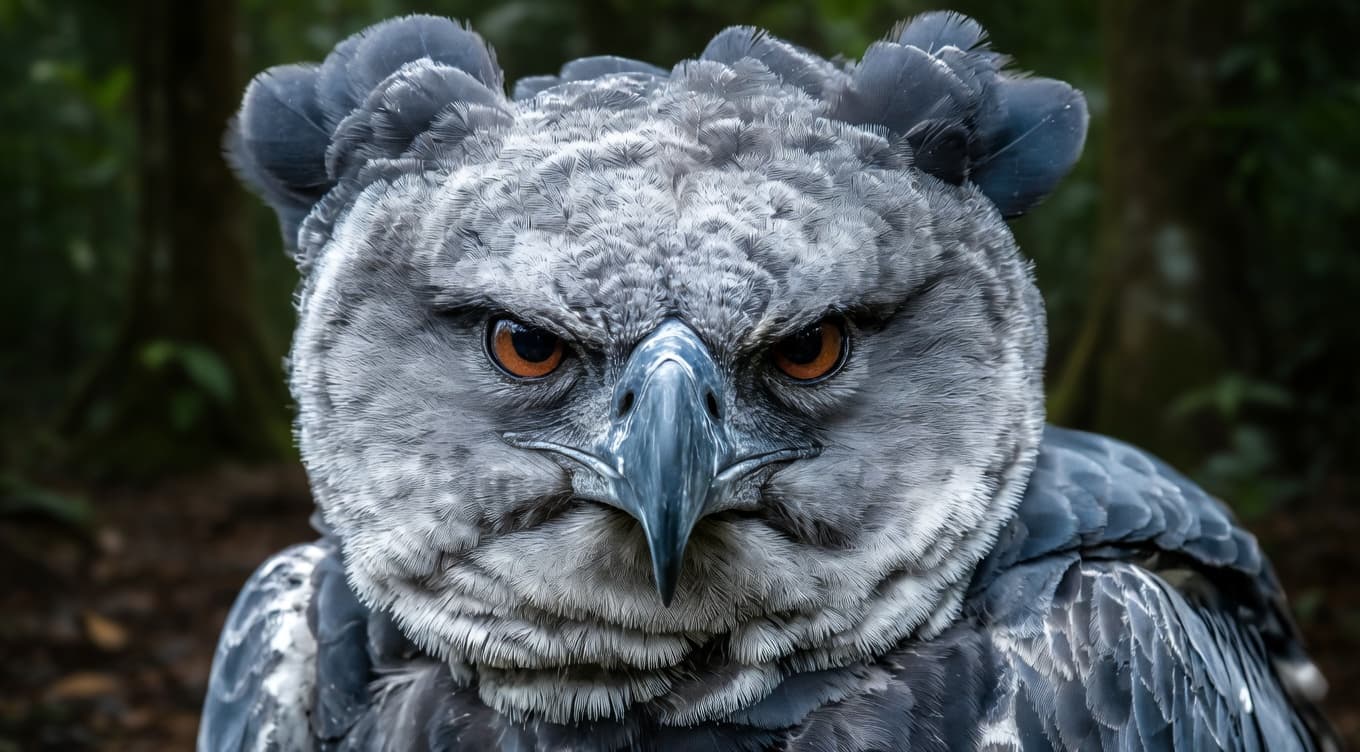
There is a broader truth embedded in this species. The predator at the top of the food web is always the first to disappear when the system degrades and the last to return when it recovers. Its presence is not sentimental. It is scientific. A forest with harpy eagles is a forest that works. A forest without them is a forest in decline, regardless of how green it appears from a satellite.
In the Ecuadorian Amazon, where titled virgin rainforest remains under permanent conservation, the conditions that sustain the harpy eagle are the conditions that define the territory: continuous primary canopy, emergent trees exceeding forty meters, functioning prey populations, and a legal framework that exists nowhere else on Earth. The eagle does not know it is protected by a constitution. It does not need to. It only needs the forest to remain standing.
That is what conservation protects. Not a symbol. A system. And the apex predator whose presence confirms, silently and without ambiguity, that the system is still working.
© Hortus Deliciarum Strategic Conservation | Ecuadorian Amazon
Contac: info@hortusdeliciarum.org
This document is provided for informational purposes. Data and findings are sourced from peer-reviewed research. Hortus Deliciarum does not provide investment advice. Readers should conduct independent due diligence.